2019
bioart installation
Presented at ICA Gallery and Aether Space, curated by Nedko Solakov, with the support of Culturama Foundation.
BioReconstruction (…of a future moment) explores the “inner life” of various objects of cultural, artistic or personal significance. Books, drawings, paintings or textiles, wallpapers from abandoned homes, suitcases and boxes that were once important but were subsequently partially destroyed, discarded or seem to have lost their value for some reason. The project deals with the issue of their destruction.
The first phase of the methodology consists of covering the objects with nutrient agar, used in microbiology. Pouring it onto the surface of the objects allows micro-organisms to develop – the life that grows in the nutrient environment is found (quite literally) within the objects themselves. The natural processes that destroy them (bacteria, fungus, and mold) are being embraced.
During this process the objects are being recontextualized – not only their vision, but their meaning is being changed; they are no longer victims of the time, place, and the person who created them, but are beginning to live new lives as “proud” bearers of their trauma.
In the final phase of the project, the entire process is being stopped, with the objects sealed within a layer of ‘epoxy-like amber’. Through the confluence of microbiology and art, BioReconstruction explores the subject of memory and the ephemerality of time, where the distortion of the outer form and its destruction are seen as complex processes that are not necessarily categorised as finite. They create new logic and give new meanings. How can we fast forward time before we freeze it forever?
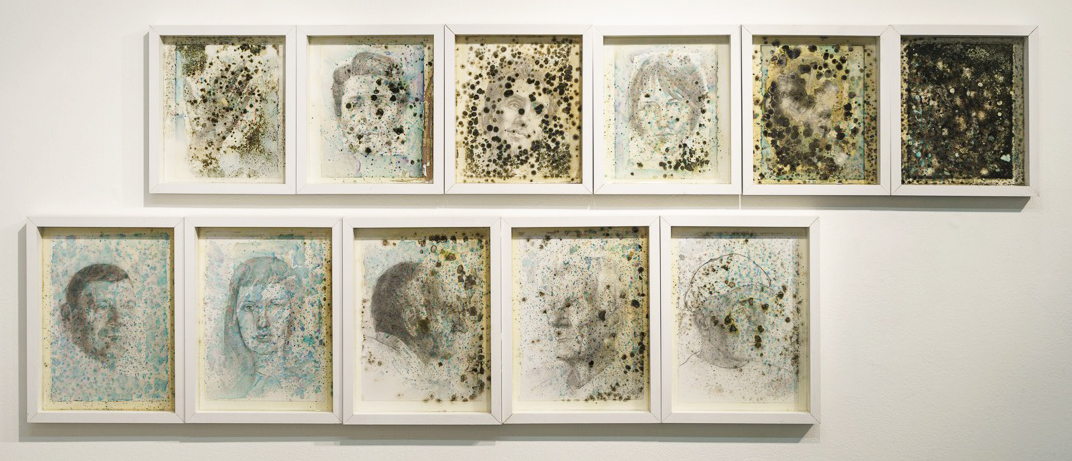
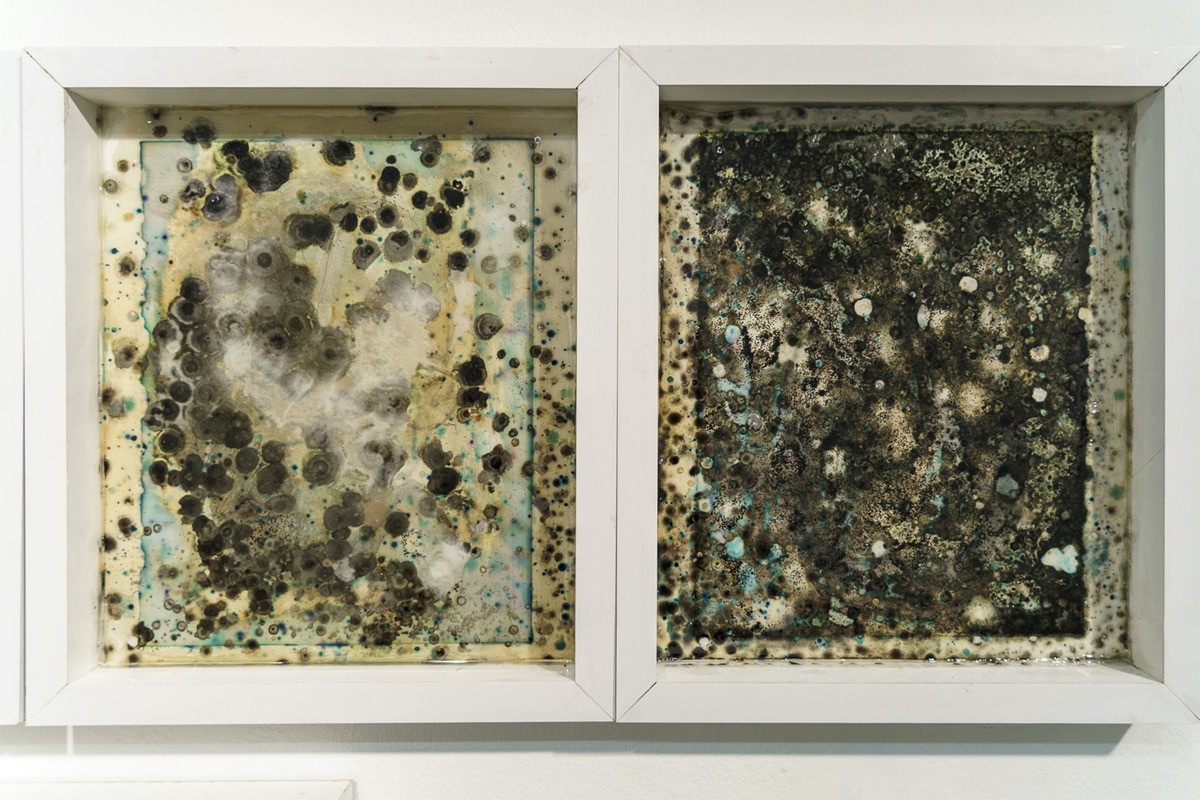
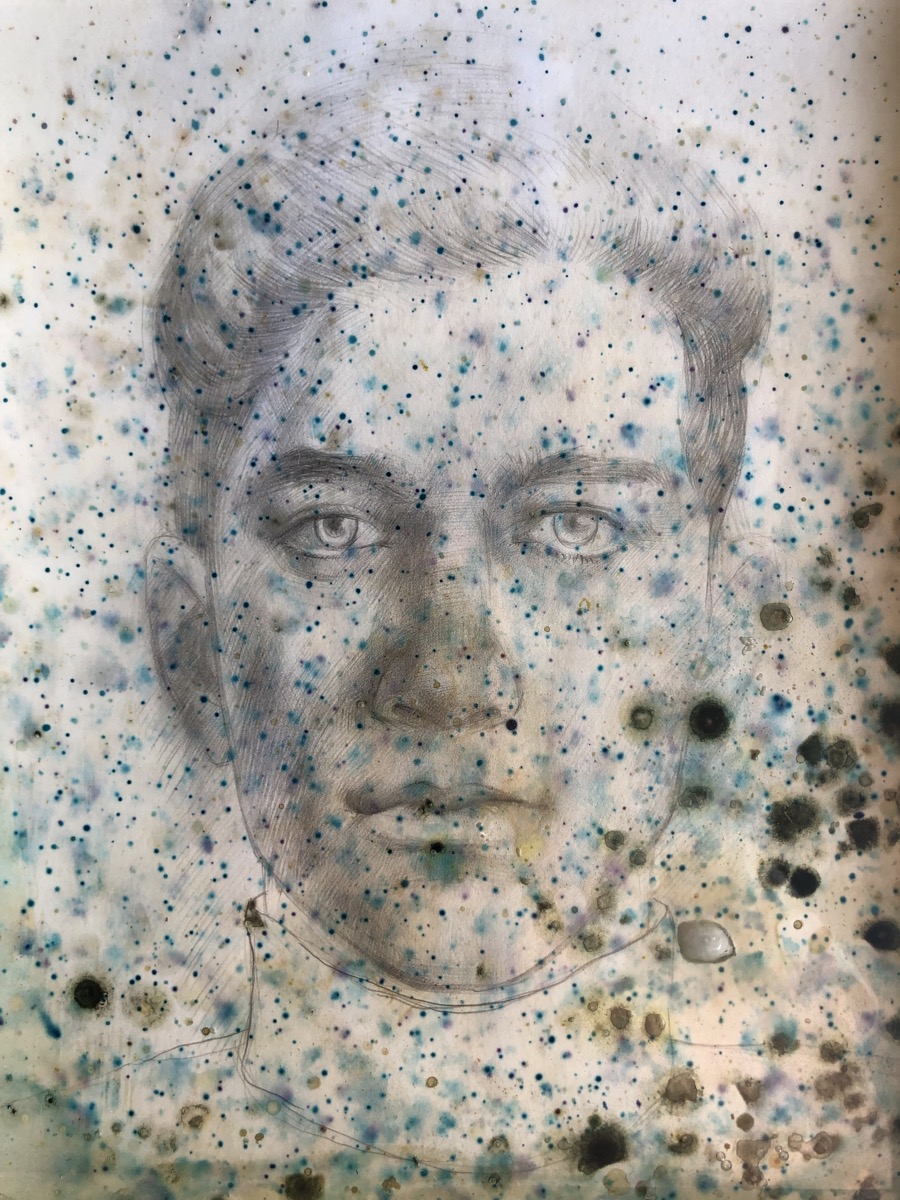
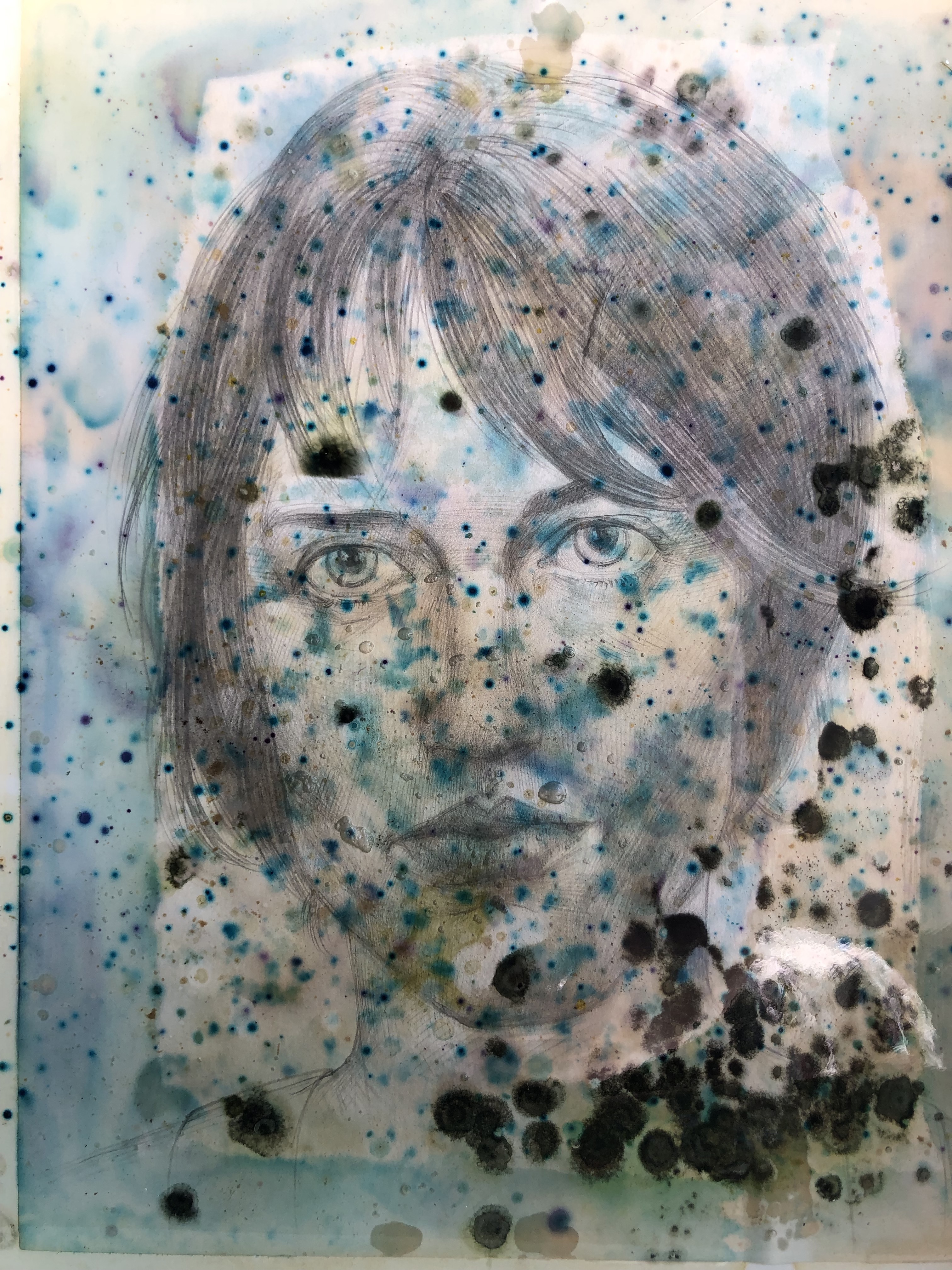
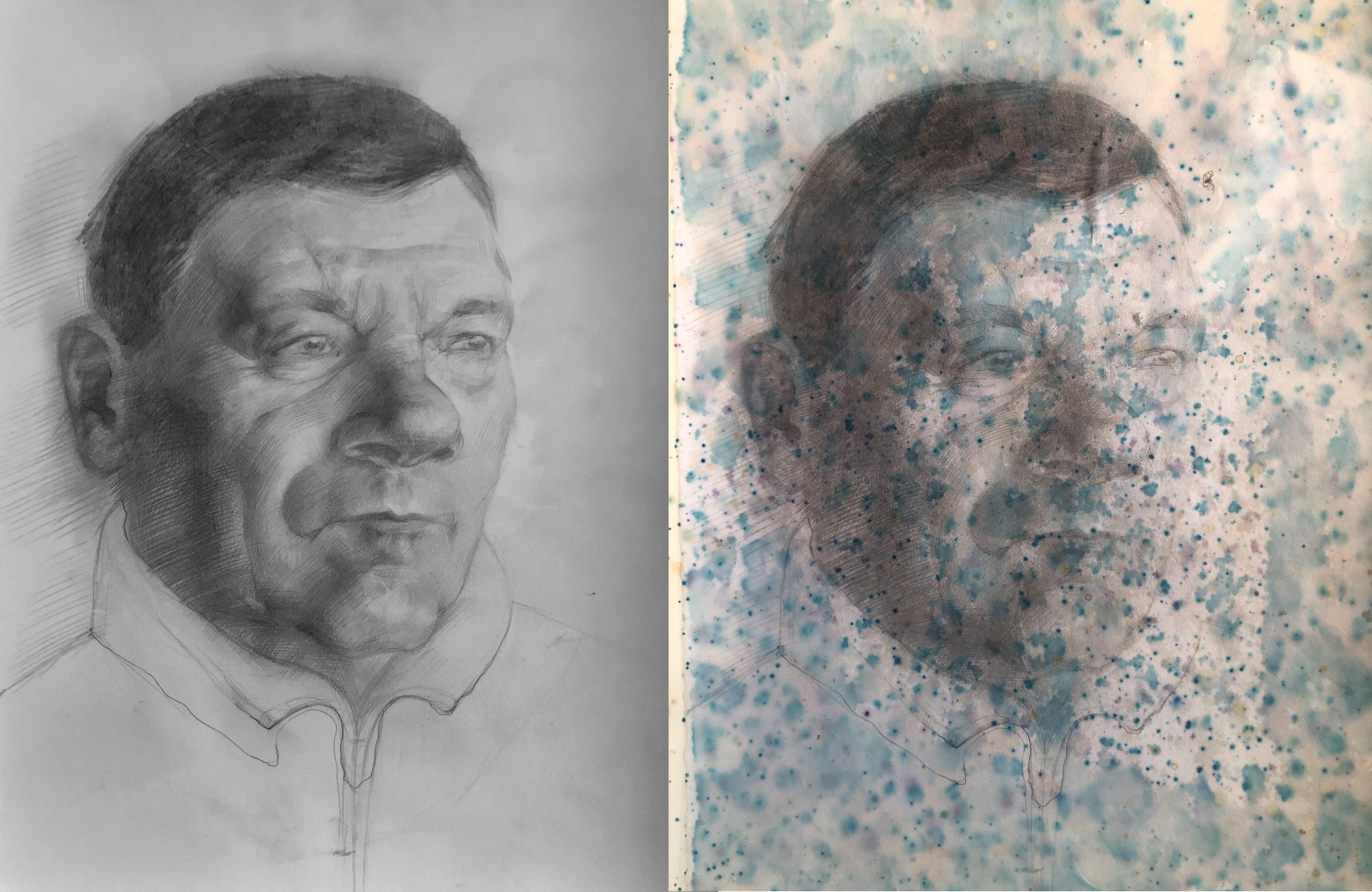
Live portraits
paper drawings, UTI agar, epoxy resin
Live portraits consists of drawings, made during the second and the third year of the author's training at the National Academy of Arts. Their purpose was purely educational - to study the anatomy and the characteristics of the human face. UTI agar is afterwards being poured on them and is left there for 10 days. Thus, they are being "reanimated" while their internal microflora is growing. Then they are "sealed" with epoxy resin.
Cozy times
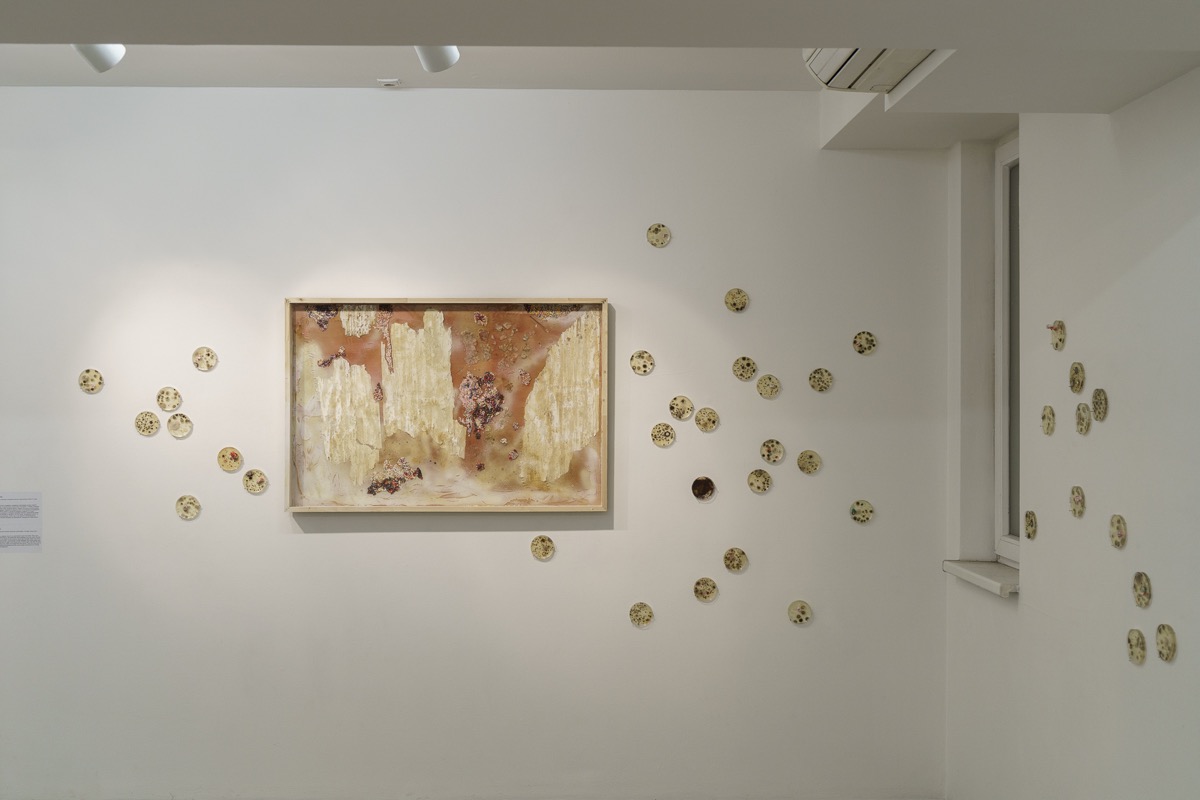
wallpaper pieces and micromosaic structures, petri dishes, UTI agar, epoxy resin
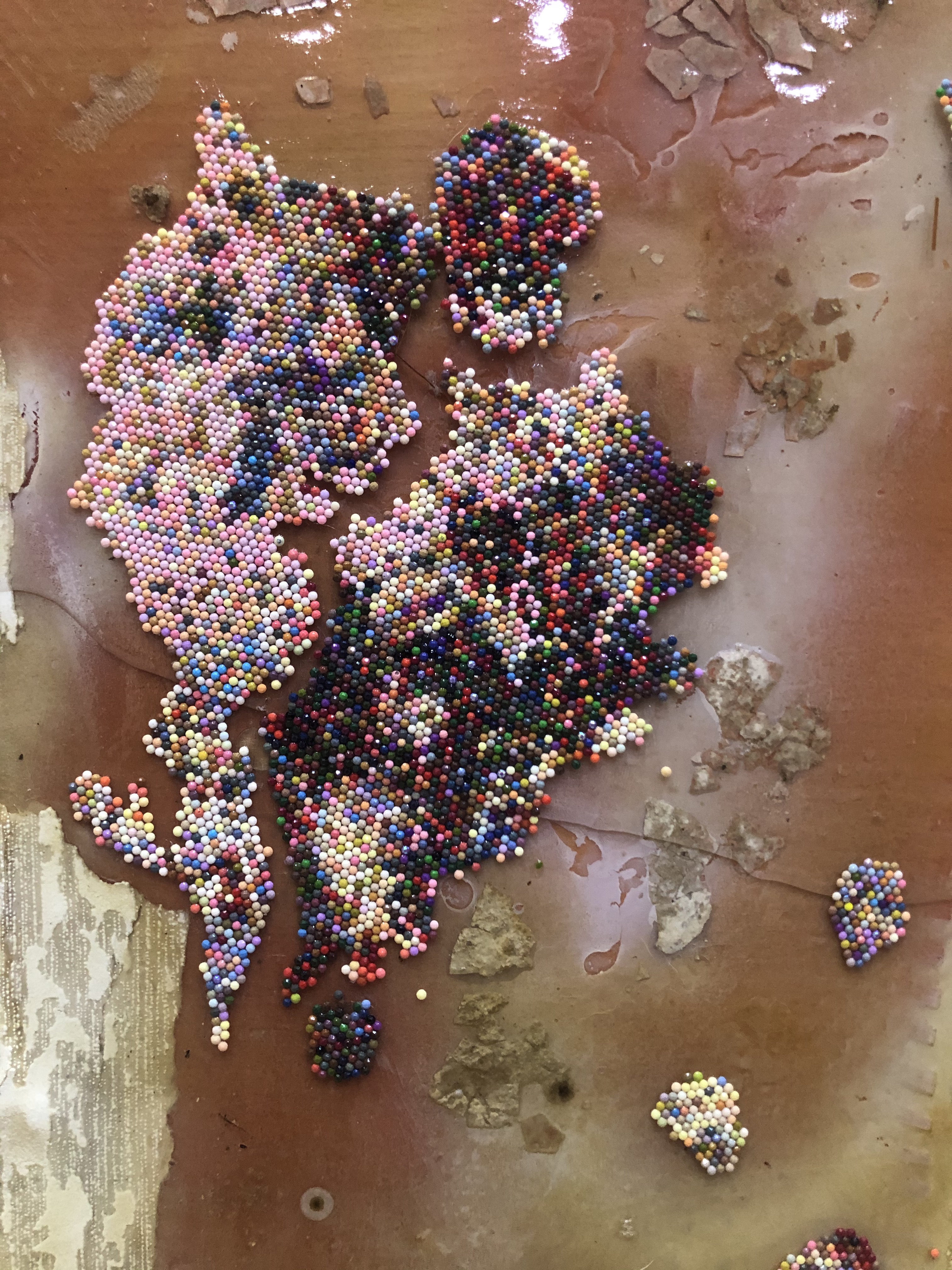
Cozy times consists of objects, found in an abandoned house near Sofia. The house was carefully built - 3 floors, decorated with white wallpapers and pink walls. Wooden doors and terrace. It is not clear how long the house has been occupied for. Most of the items that were left there, got stolen. Large pieces of white wallpaper and broken glass were collected and covered with UTI agar. Petri dishes with a nutrient agar were also left open in the space so that they can collect microorganisms from the air. Thus, the "inner life" of the house is resurrected and embraced and the micro-mosaic structures try to visually rethink the process of destruction.
5
The "complex" color problem
oil paintings, UTI agar, epoxy resin
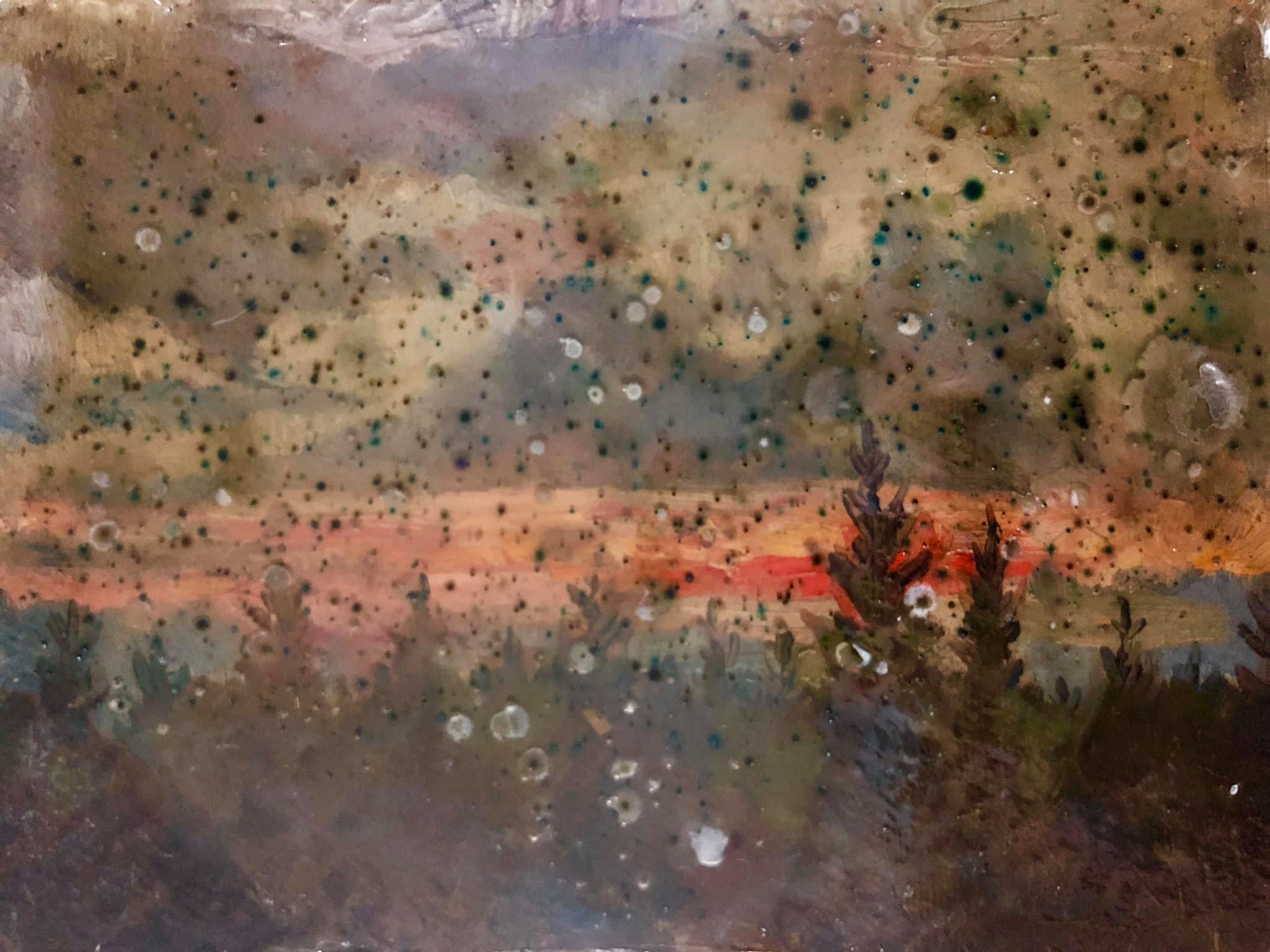
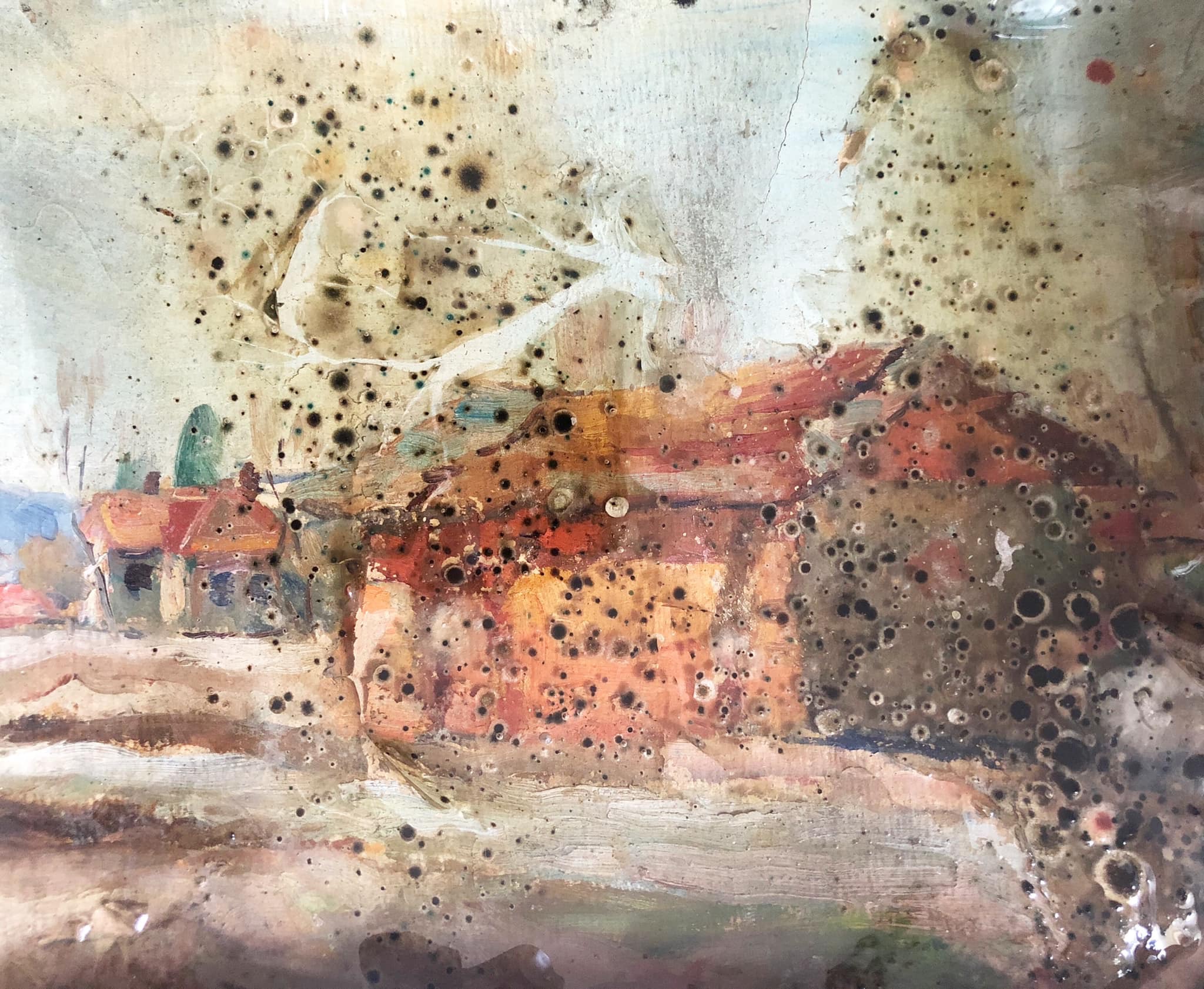
During the classical training at the Art Academy it is always appreciated when the painter creates the so-called 'complex' colors, as it makes the painting better. Thus, by solving the problem of the "complex" color, the artist partially solves the overall color problem of the work. The "complex" color problem consists of discarded paintings of the 1950s, when these topics in the classical painting education were particularly important. Once they are found, they are covered with a nutrient agar, and the microorganisms that are found on the surface of the paintings start growing, forming a new 'picturesque' layer, which has a completely natural color. Thus, they "complete" the exercise, solving the problem of "complex" color in a completely "natural" way.
Security zone
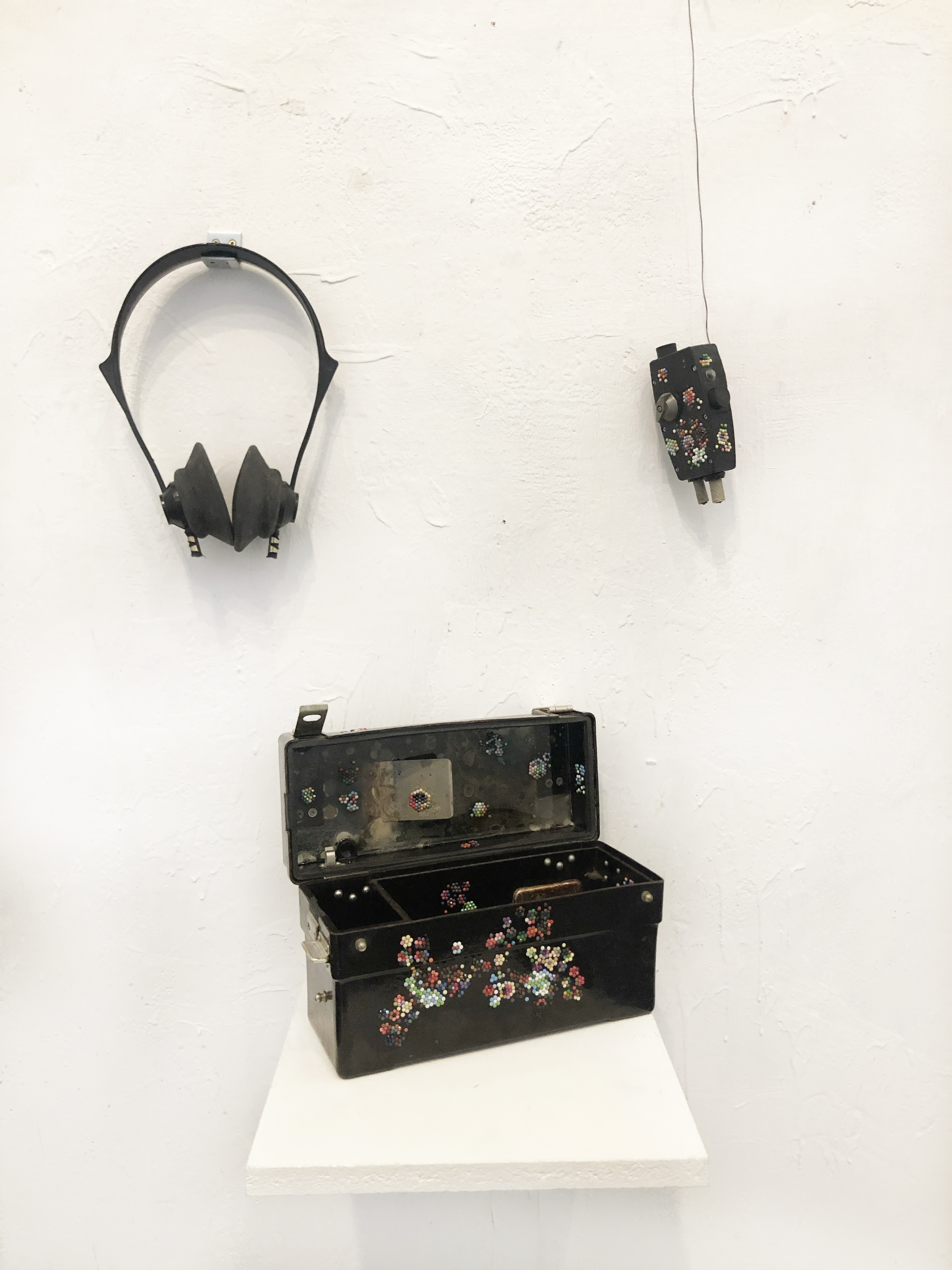
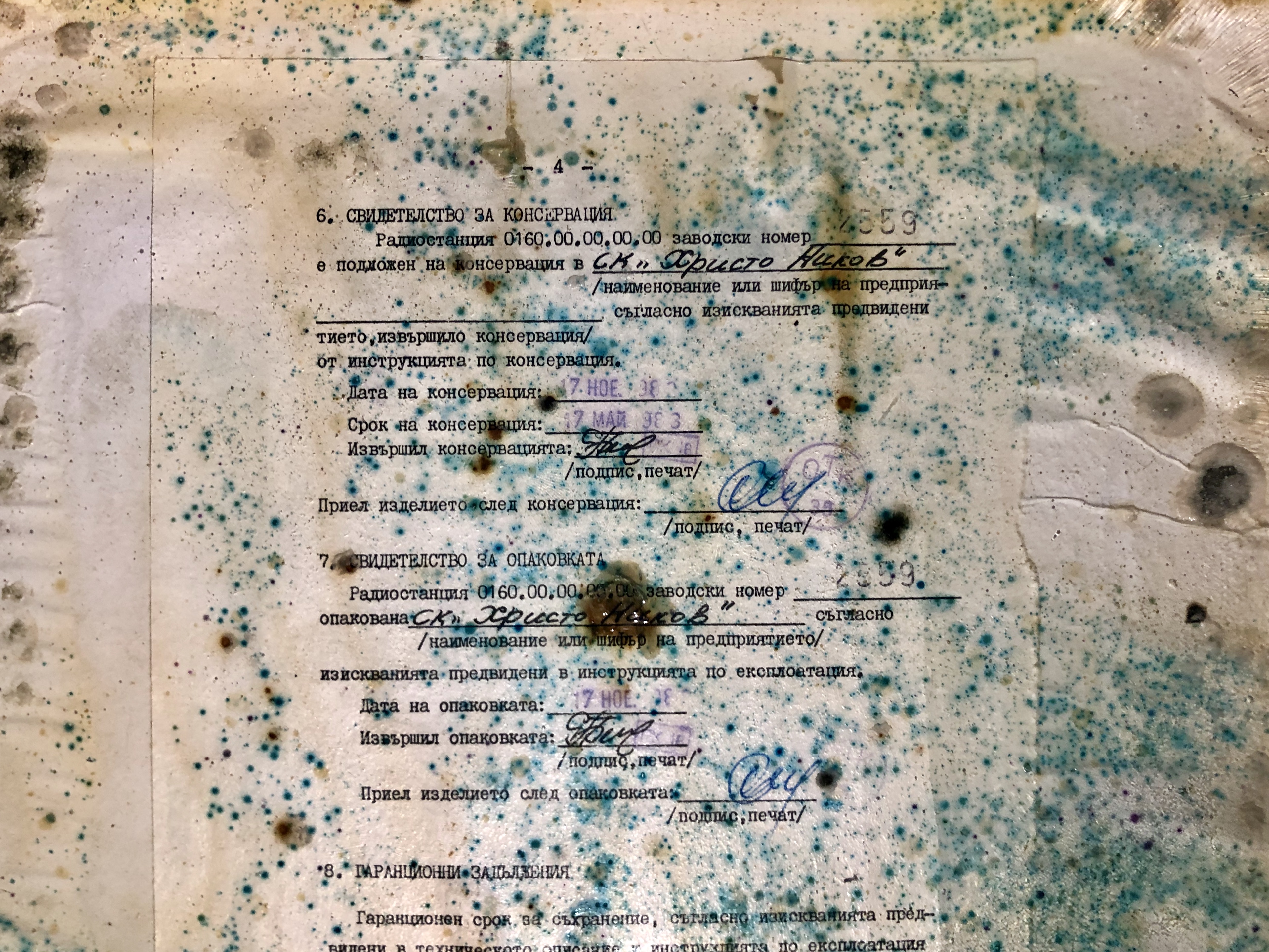
found radio station box with guide book pages and warranty card, UTI agar, epoxy resin
Security zone consists of items found in a police unit. A box from a radio station, as well as a guidance book with diagrams for its use, an outdated suitcase. Having fulfilled their ‘duties’ to the state, they are no longer needed. Laying on the ground in the unit, they create their own microflora, which, in addition to preserving the memories of the time spent working, they also accumulate new ones, creating space for the development of various microorganisms. The objects are covered with UTI agar, which accelerates the natural processes of time, and the micromosaic structures attempt to rethink the "new" context in which these objects are located, transforming them into carriers of their time and memories.
8