2021
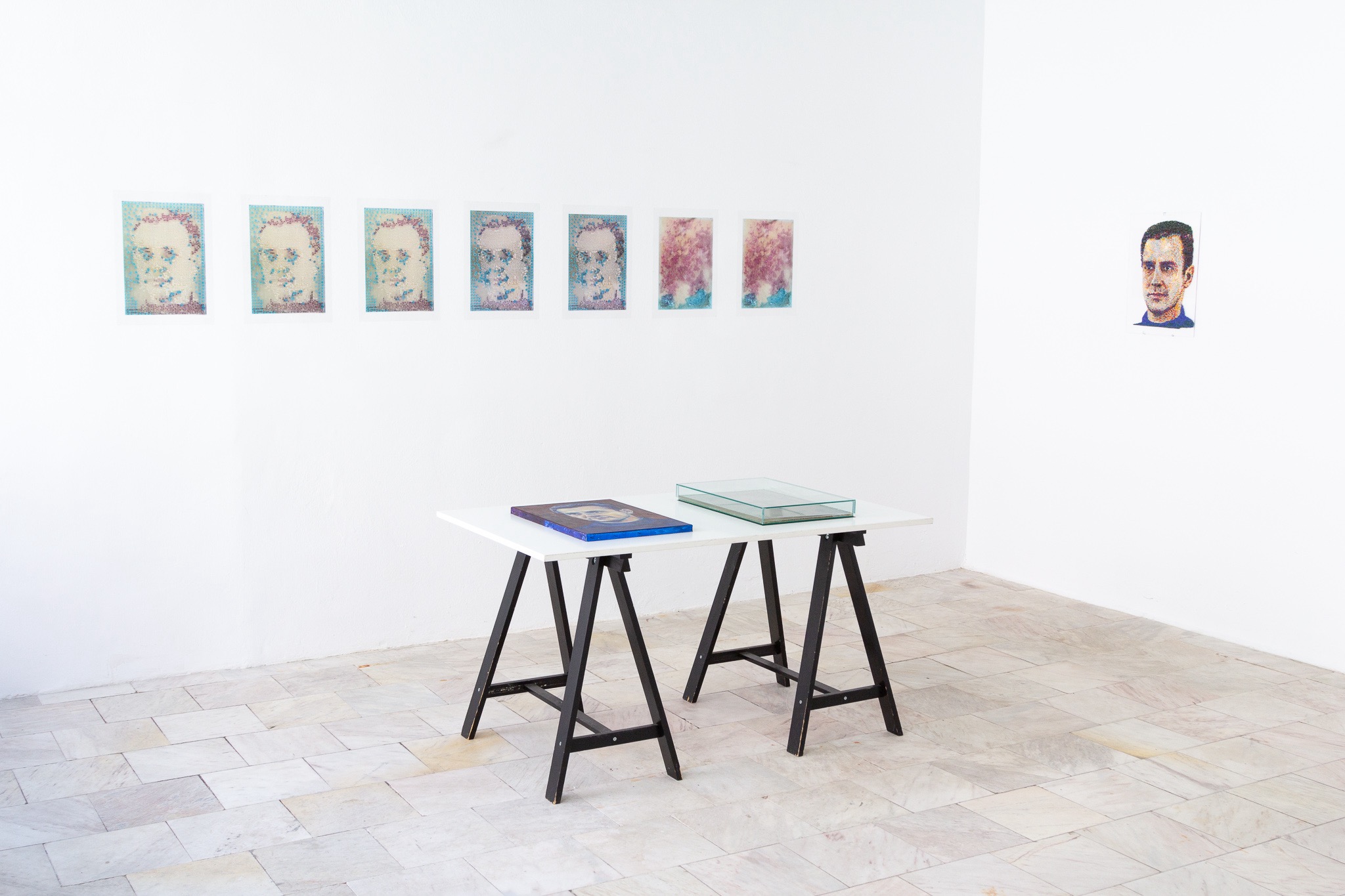
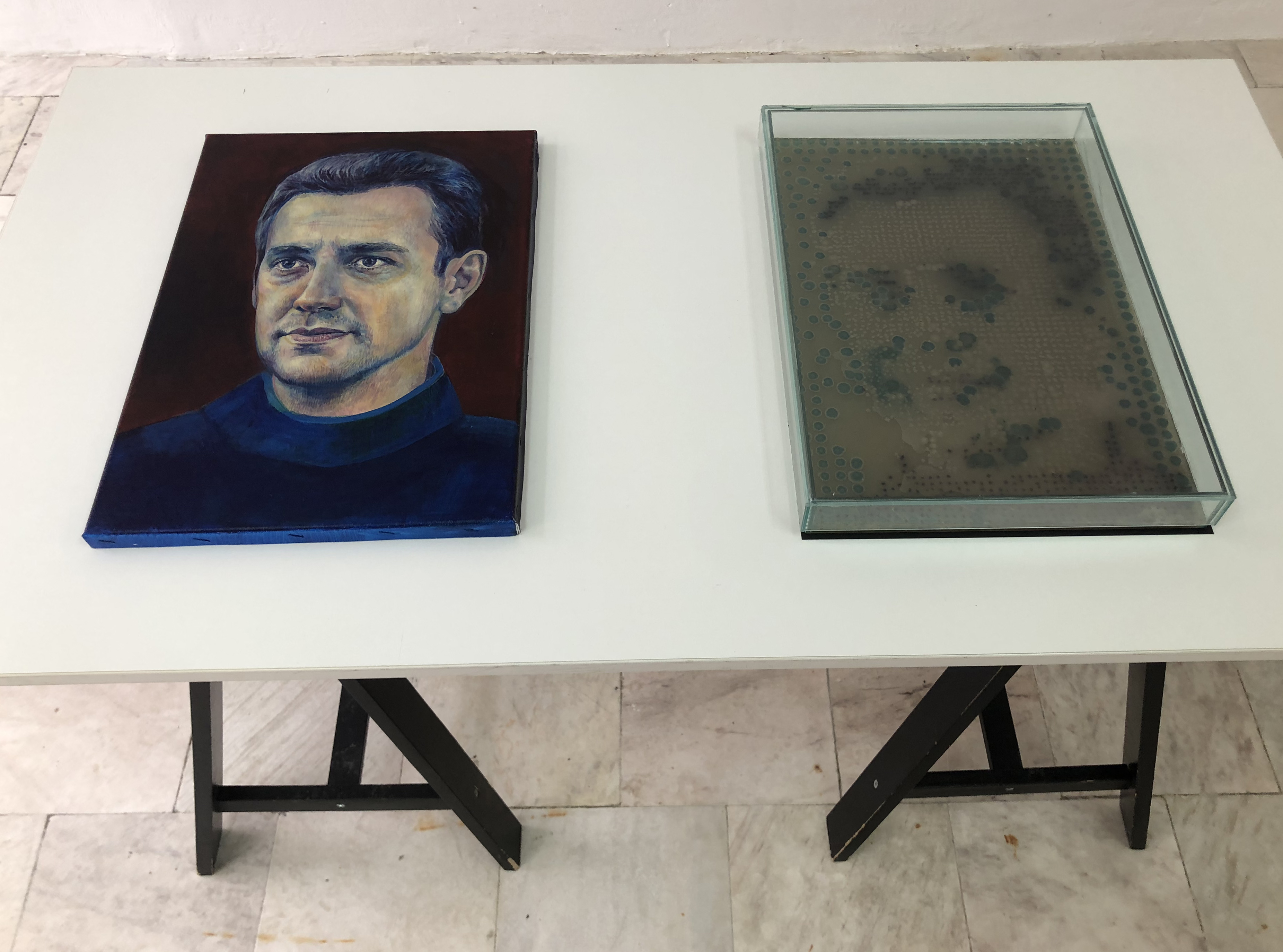
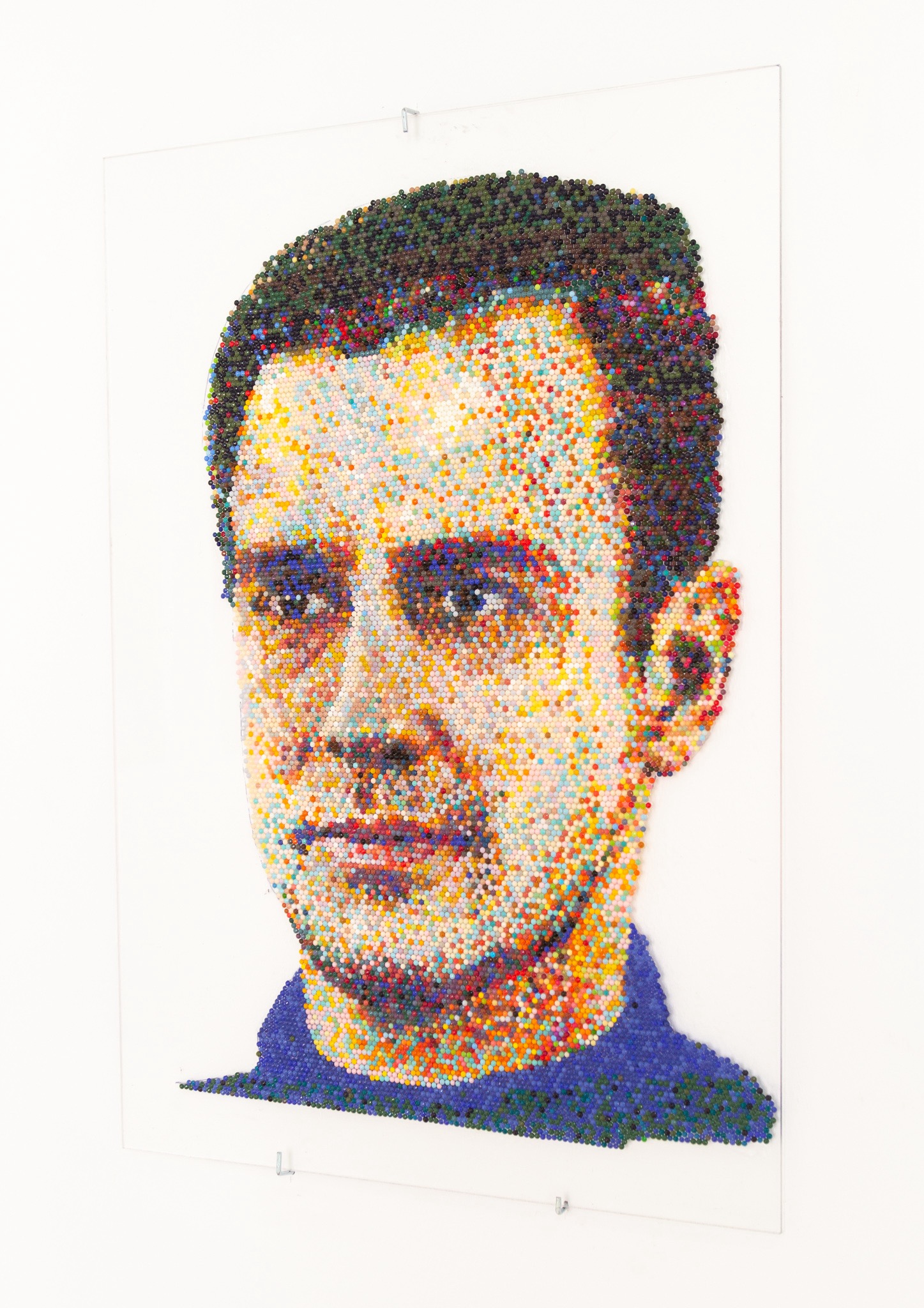
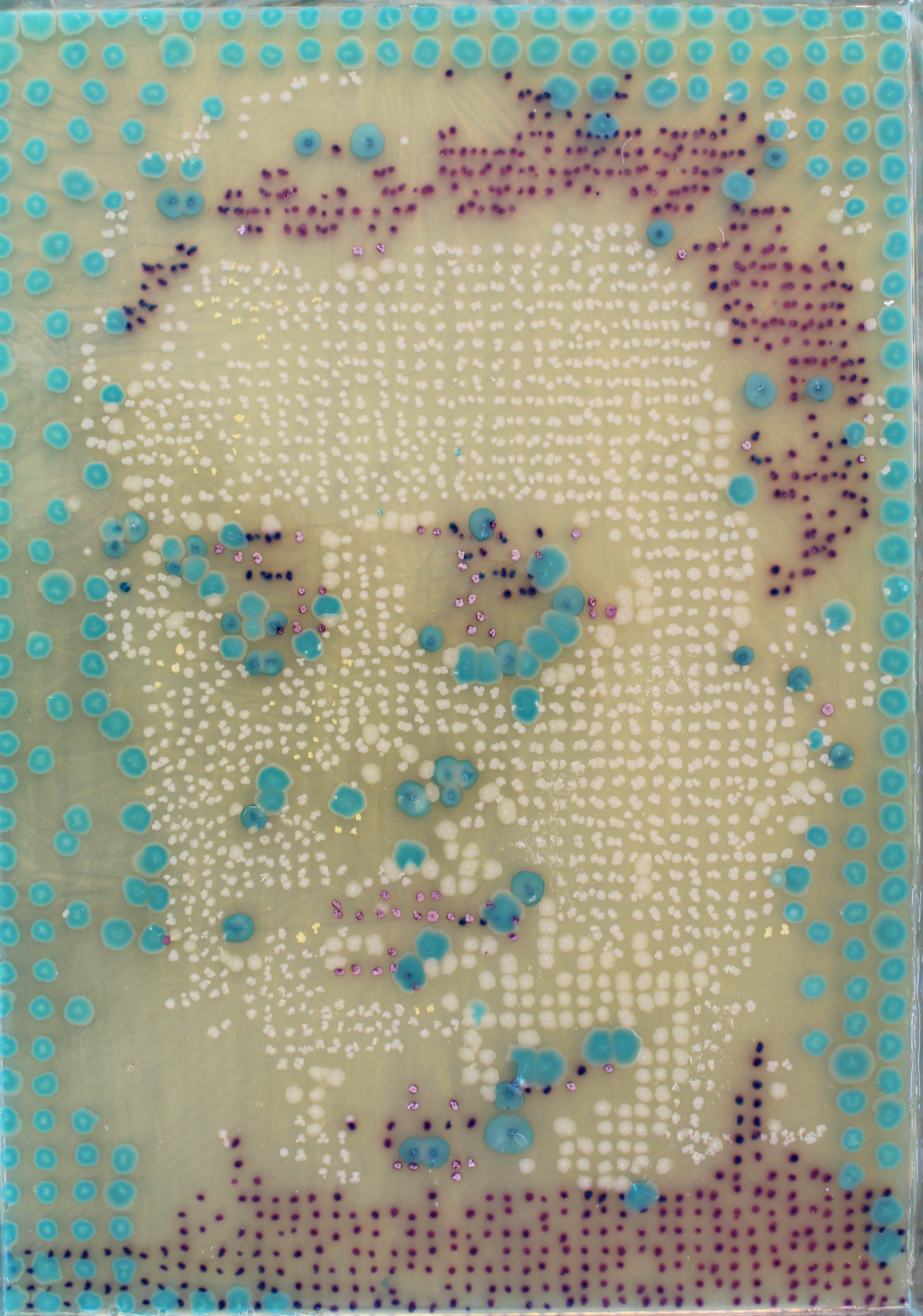
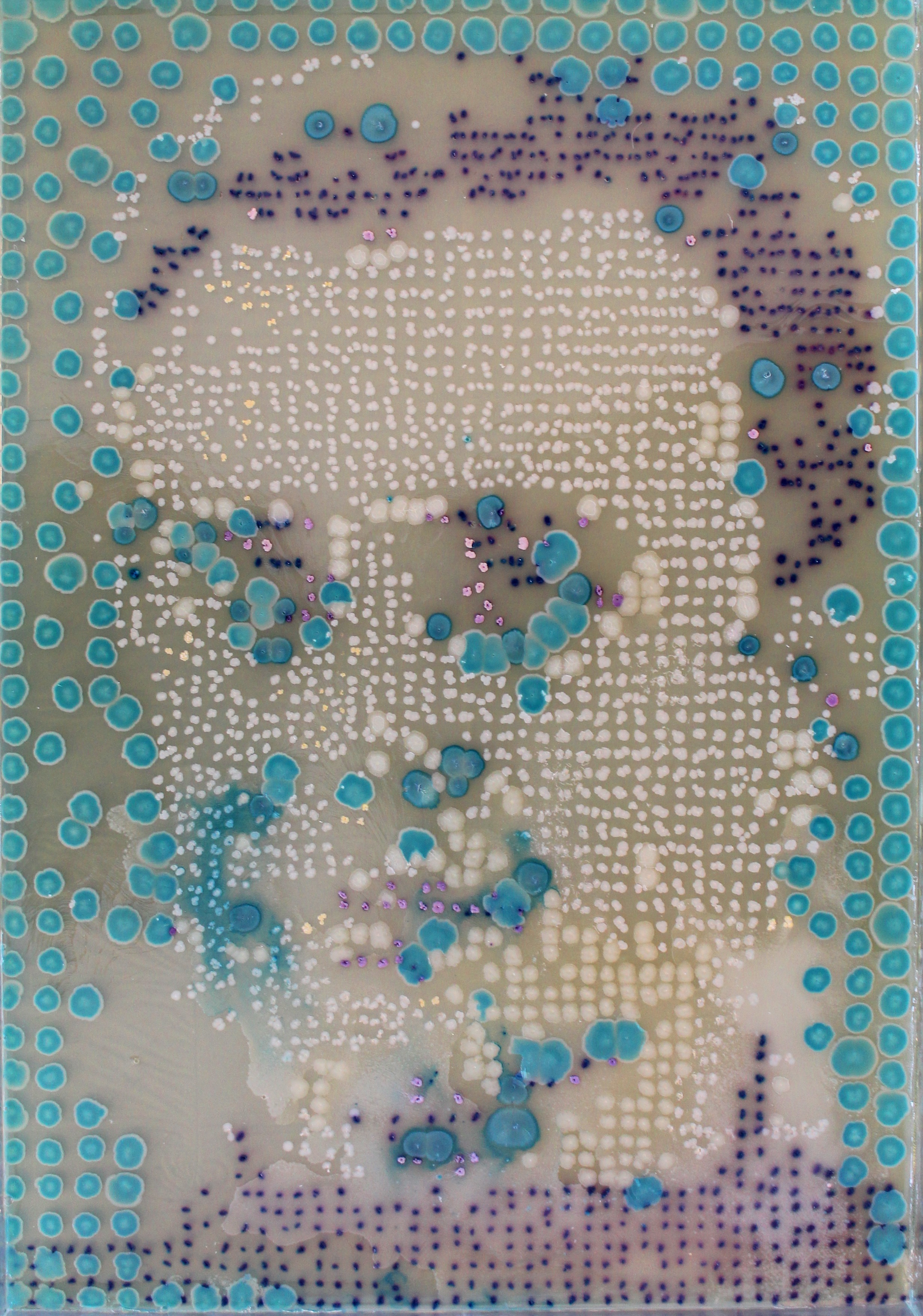
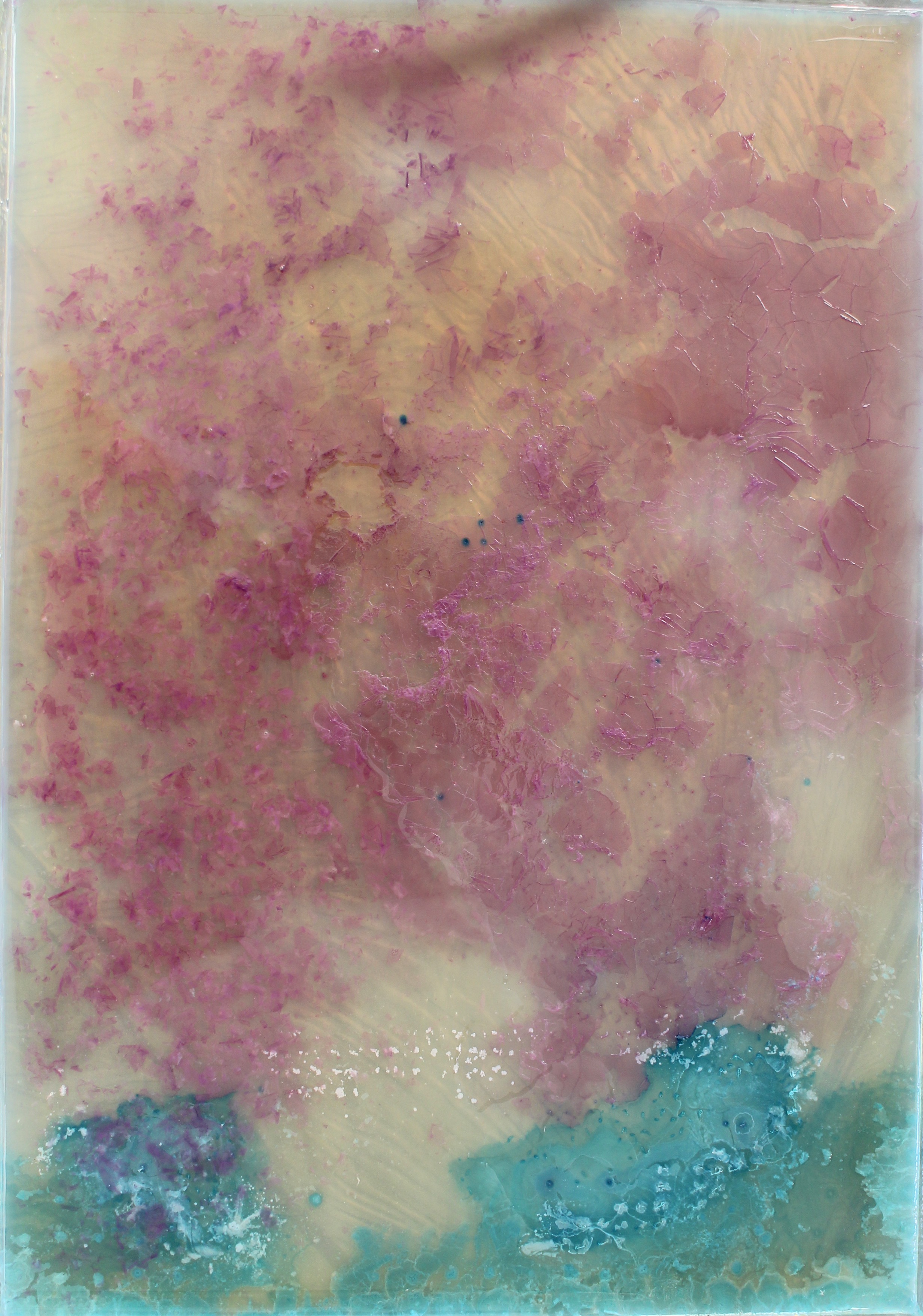
bacterial culture on agar (35x50cm), mosaic of synthetic tesserae on plexiglass (35x50cm), print on folio (30x42cm), acrylic on canvas (35x50cm)
Created in collaboration with Martin Yordanov (engineer, physicist); Yordanka Dermendjieva (microbiologist) the project is supported by DA Lab Foundation with eValuation scholarship for 2021.
The project is a constant dialogue between visual art, artificial intelligence, and microbiology. During this process occurs a constant transfer of the same visual information between these three fundamentally different fields.
In the first stage of the project, we take an artificially generated human face and recreate it into the field of visual art in the shape of a painting. The next stage is creating a mosaic from the portrait, with round plastic dots reminiscent of a bacteria growth in a petri dish which also grows in a round shape. The final stage is recreating the mosaic in a microbiological medium. Using different pathogenic bacteria species, because of the colours they produce, the final stage is a bacterial mosaic.
By traveling from the digital medium through visual art, the non-existing human face ends up in the field of the natural world, where the laws of nature take place and decide its destiny.
While using the correct colors, there is something else that influences the image – the struggle to survive. While dwelling in the same living space, the bacteria are placed in a competitive environment – each species tries to fight for life resources. During this process, they each decide how to behave – sometimes they grow more rapidly in order to take over the space. Other times they release toxins in order to kill the other around them. In rare cases, they create ‘social distance’ between one another by making a borderline which they don’t cross. In the end, none of the strategies work, and all of the bacteria eventually die.
In any case, each decision reflects on the portrait, and the result of it is a change in the image. This is why, for instance, the face does not have eyes – one of the species grows so rapidly the bacteria in the eyes cannot grow.
The project explores how visual information becomes an indicator of the functionality of the whole system and calls into question the efficiency of the natural laws of communication on a fundamental level. Each transfer damages parts of it, but it also reflects upon the very nature of the system it belongs to. The same way the AI decides to put a pixel on a particular place, the bacteria decides how the visual image would look like, only following different laws – those of nature – since this time their purpose is also fundamentally different, related to their survival. Thus, the result is quite different – an (almost) ruined human image.