2024
drawings, paintings, 3D objects
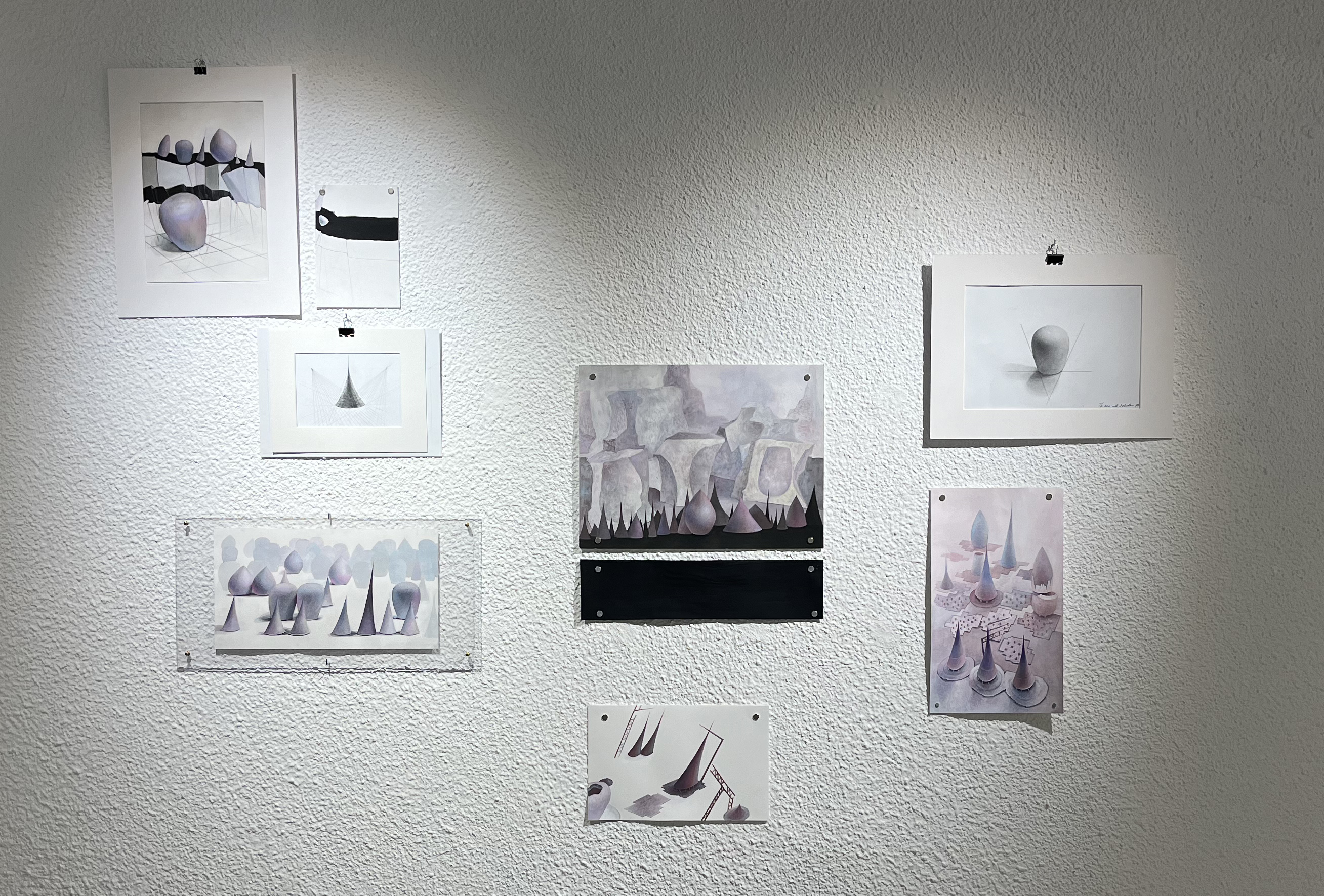
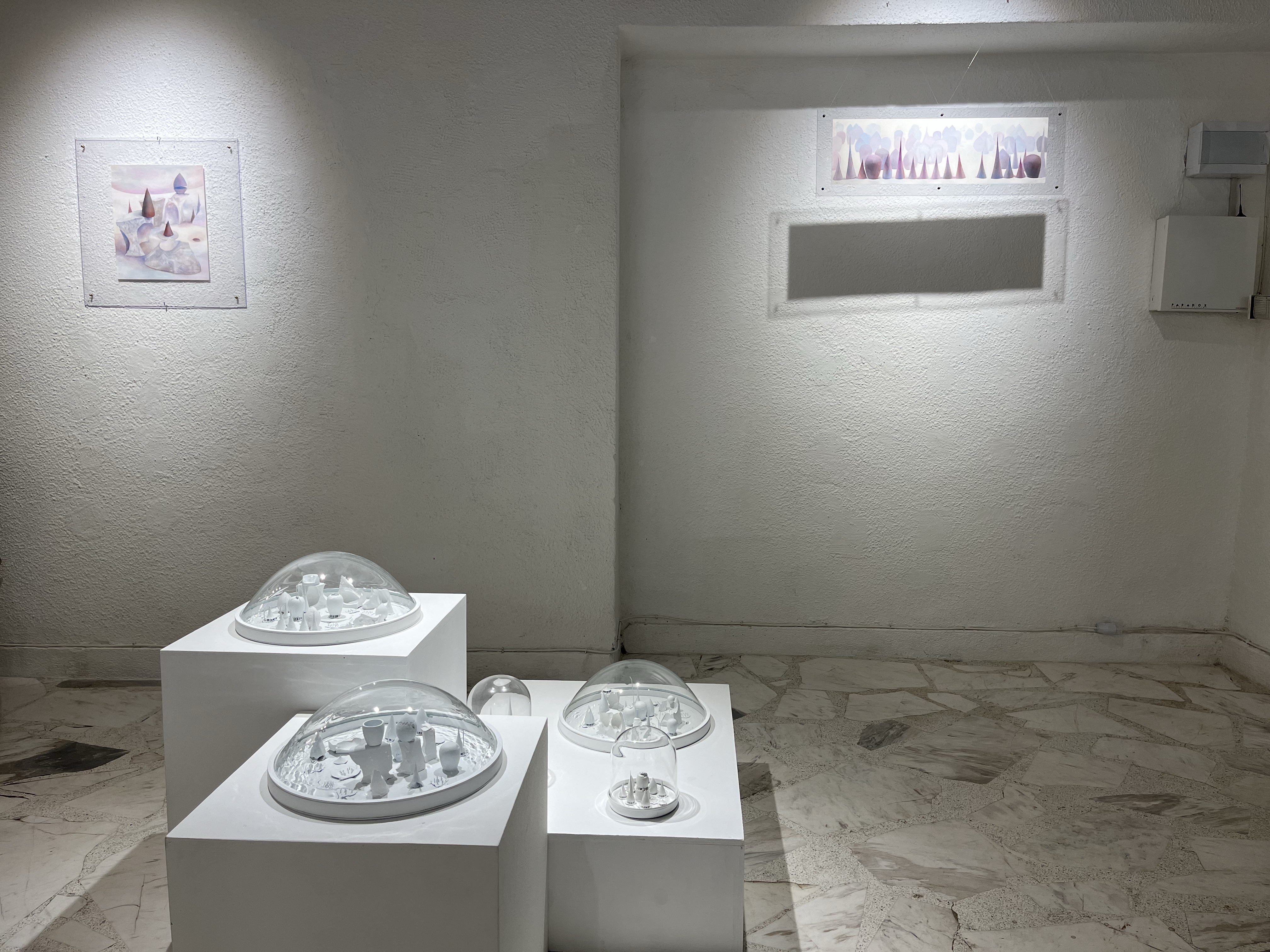
The exhibition Metropolis of Mistakes explores the organisational principles of urban spaces and questions whether it is possible for a system whose main building block is initially "defective", to function. How can an essential difference give rise to an entire urban logic and thus create a real space around itself?
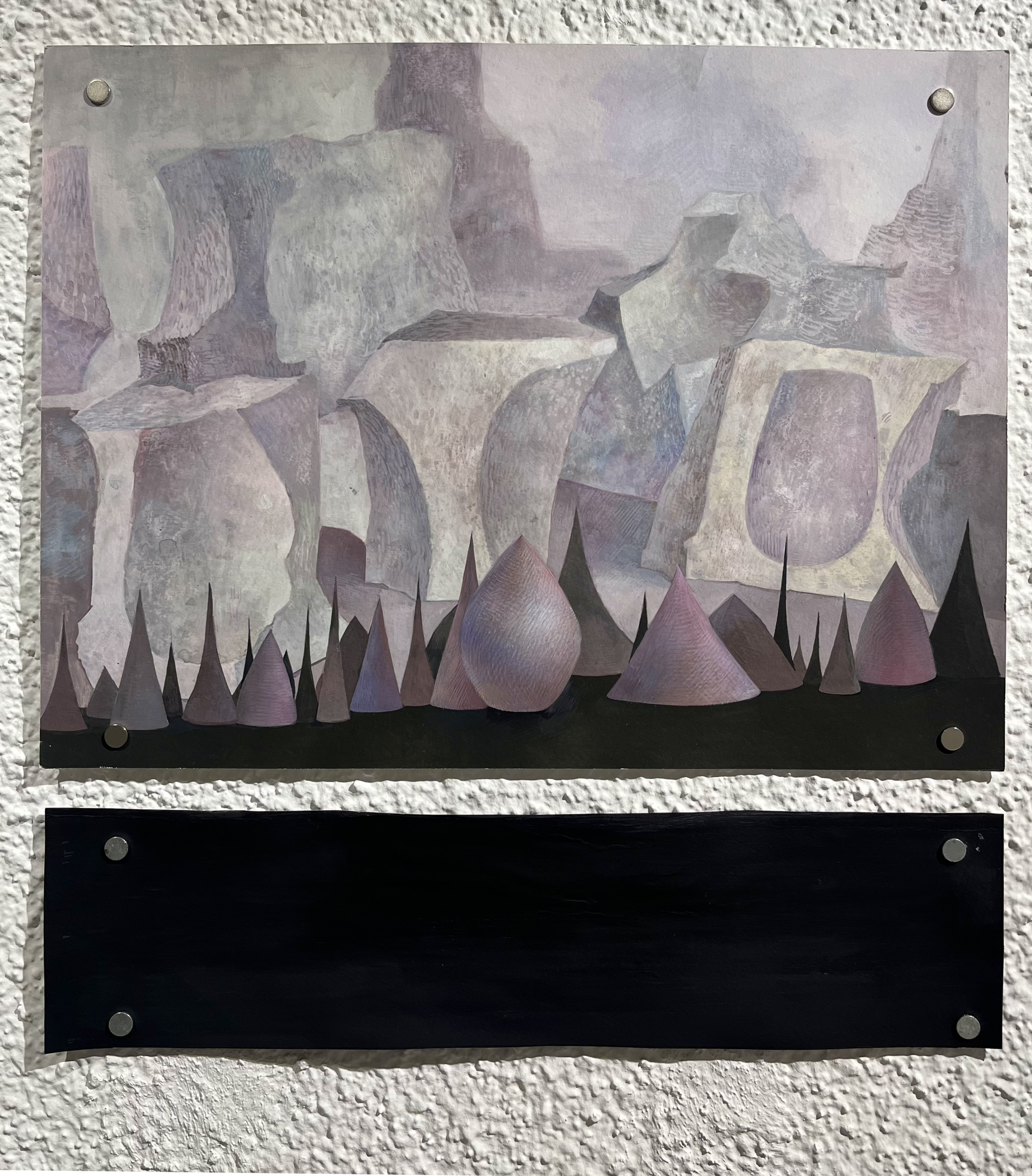
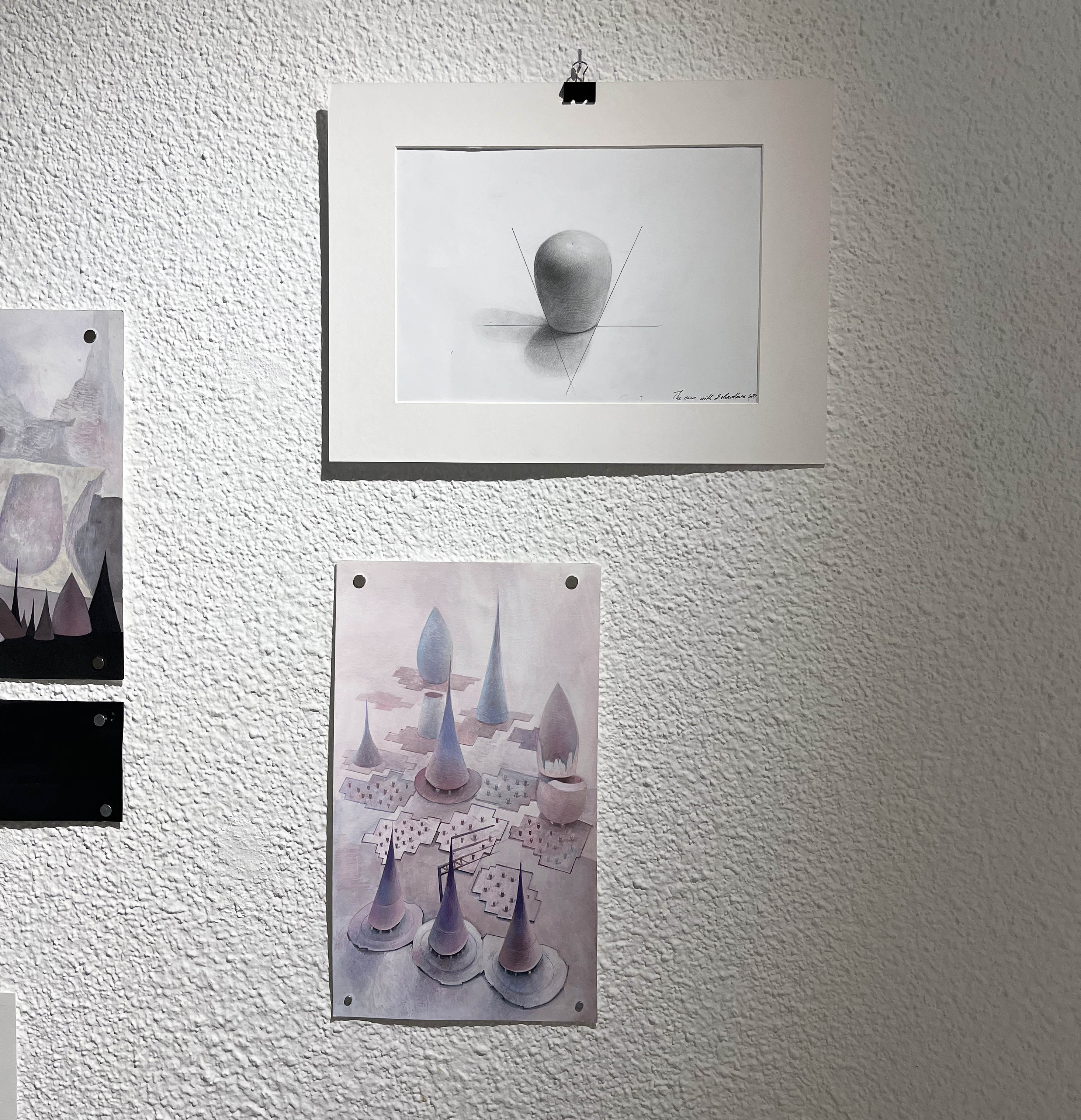
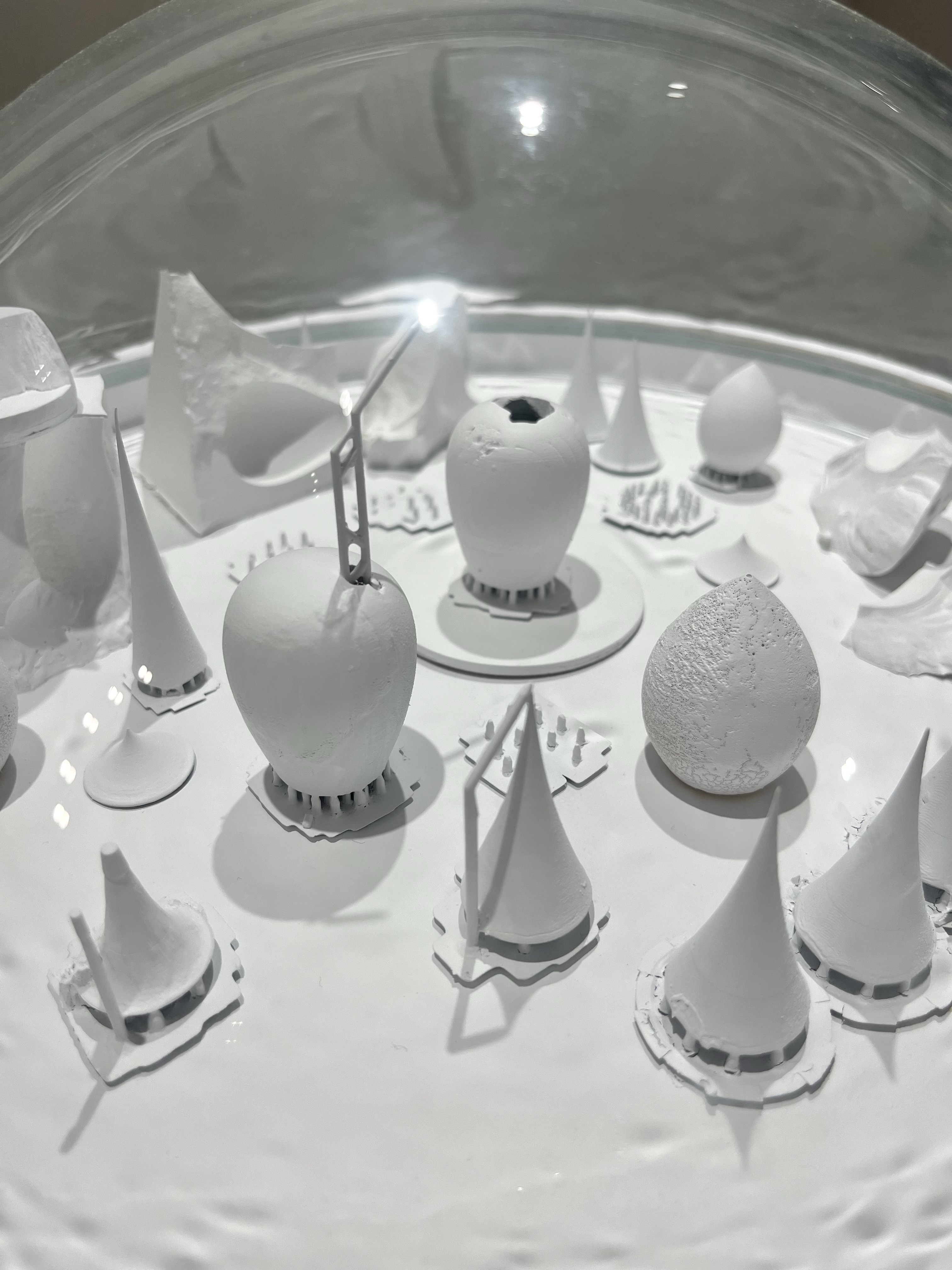
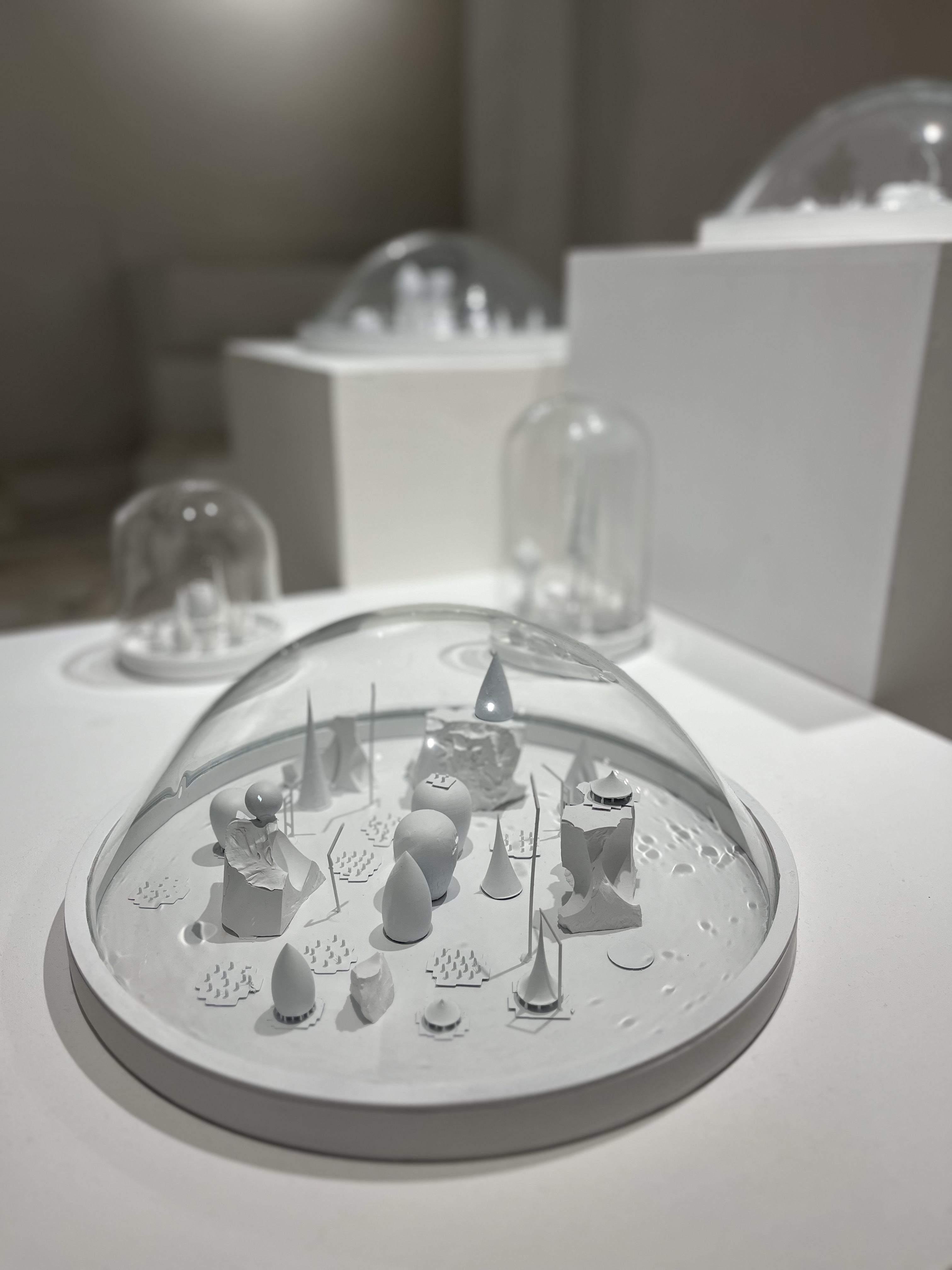
The project consists of numerous 3D objects, generated while the author is working with a 3D printer, trying to print different types of Bezier cones. Due to technical and mostly human factors, this attempt turns into a 6-month technological disaster, at the end of which a huge collection of defective cones was obtained. As the author grapples with the aftermath of this micro-catastrophe, she finds herself surrounded by these ‘defective" objects, which allows her to study them, getting used to their presence. And instead of trying to “erase” them, she decides to accept that their existence is possible, as long as she creates equally "wrong" spaces for them to exist.
The objects are often crooked, with spilled and missing parts and uneven bases. They have their own logic that has nothing to do with their original purpose. Organised into 'urban' spaces, they are free to create their own mechanism of residence. Seemingly orderly and utopian, on a second reading they are completely dysfunctional in the context of an urban environment, they contain no straight lines, their walls are not always smooth, the ceilings are a relative term, the armature holds their outer part at a single fulcrum. The cubic spaces of the buildings have been replaced by Bezier curves, in which the comfort of familiar architecture is absent.
Thus, defining them as "defective" depends entirely on the perspective through which they are viewed. The pictorial elements in the exhibition allow the distortion of reality and its filtering through the prism of the personal view, the possibilities of which are unlimited, but still dependent on the introduced rules of illusionism. This naturally leads to the question, if the perception of error is valid only in its own context, what would the concept of the future city look like?
The exhibition shares the point of view in which the city is seen as a collective illusion, an averaged notion of tolerable functionality, in which we exist in a constant state of error generators. But this is probably the only possible imperative of motion.
The exhibition is curated by Martina Stefanova, gallery Atelier 28, Sofia, glass objects: Nikola Grozdanov.