Process Anatomy: Tales of the Limit
2022
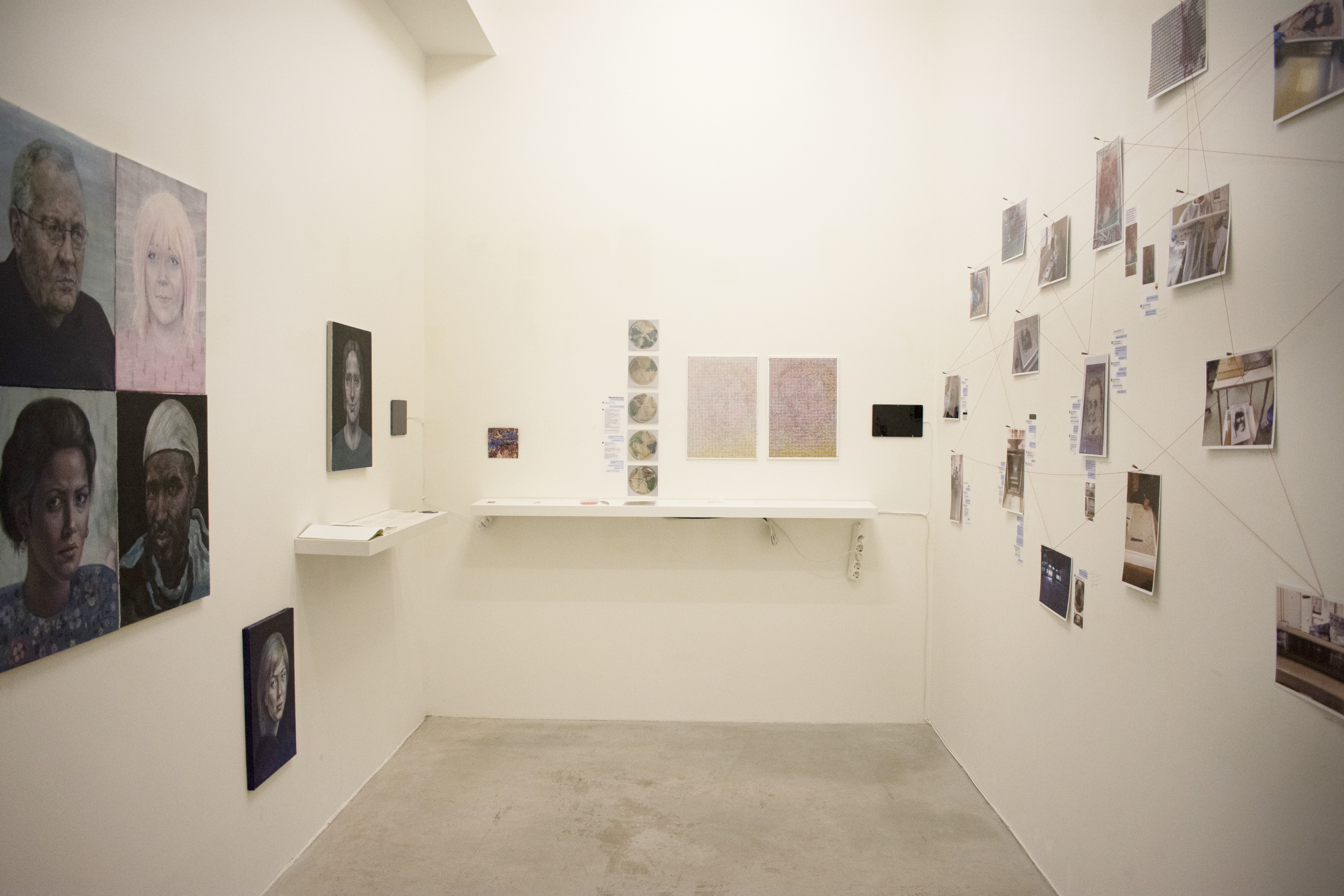
The “Process Anatomy” is a curatorial project by Vasil Vladimirov, created for the Project Room at Structure Gallery, Sofia, which explores the complexities of innovative art practices and their exploratory characteristics dissociated from a predetermined final object. A series of exhibitions present existing works by four different artists. Rather than in their materiality and “finished form”, they are present through ideas and references related to the artistic research and the process of making behind them. The gallery space is transformed into a studio of sorts where viewers are involved in a process of “reverse engineering”, tracing the research methods and processes at the heart of the respective artistic practice. One of the presented projects is Tales of the Limit by Aksiniya Peycheva.
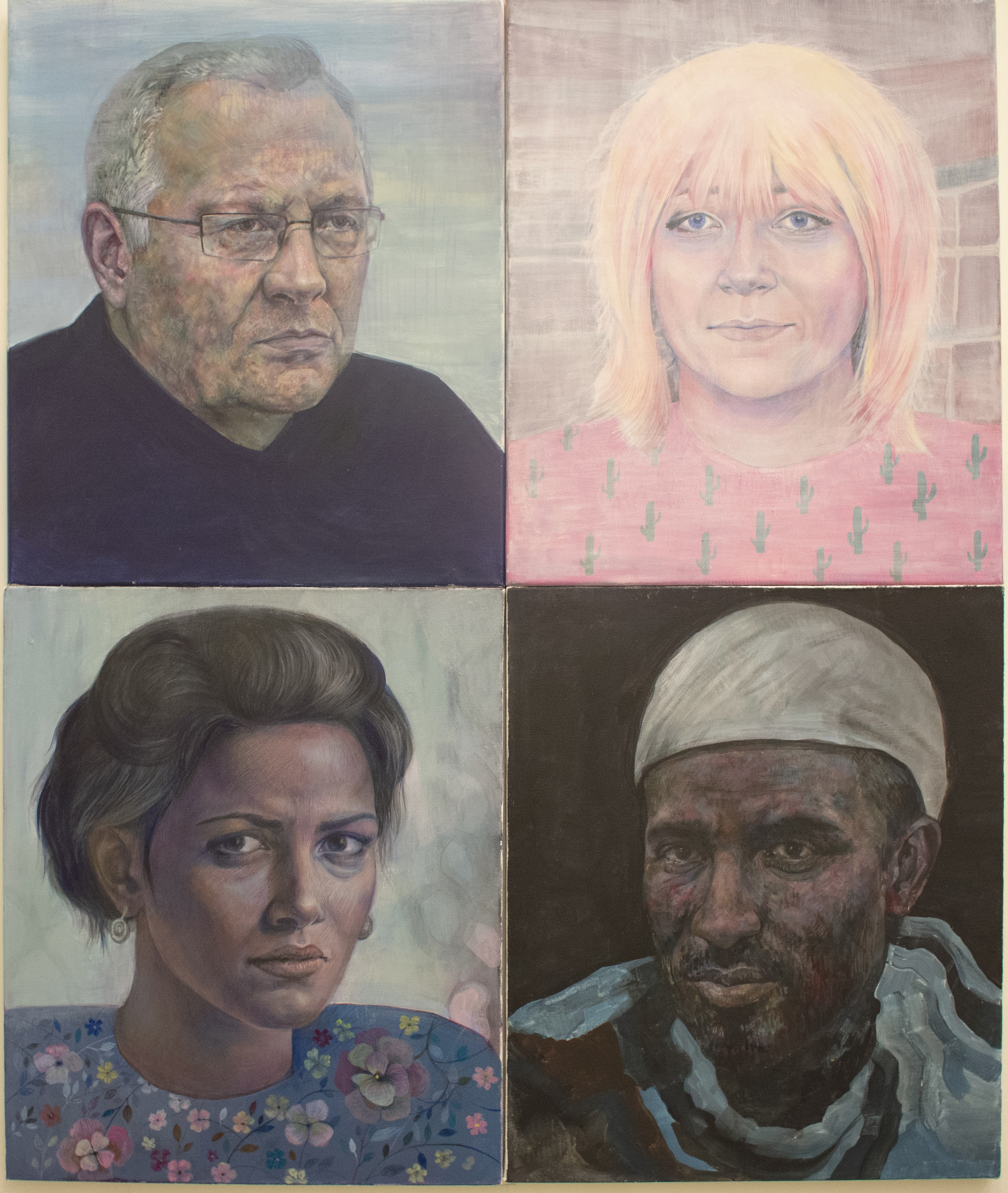
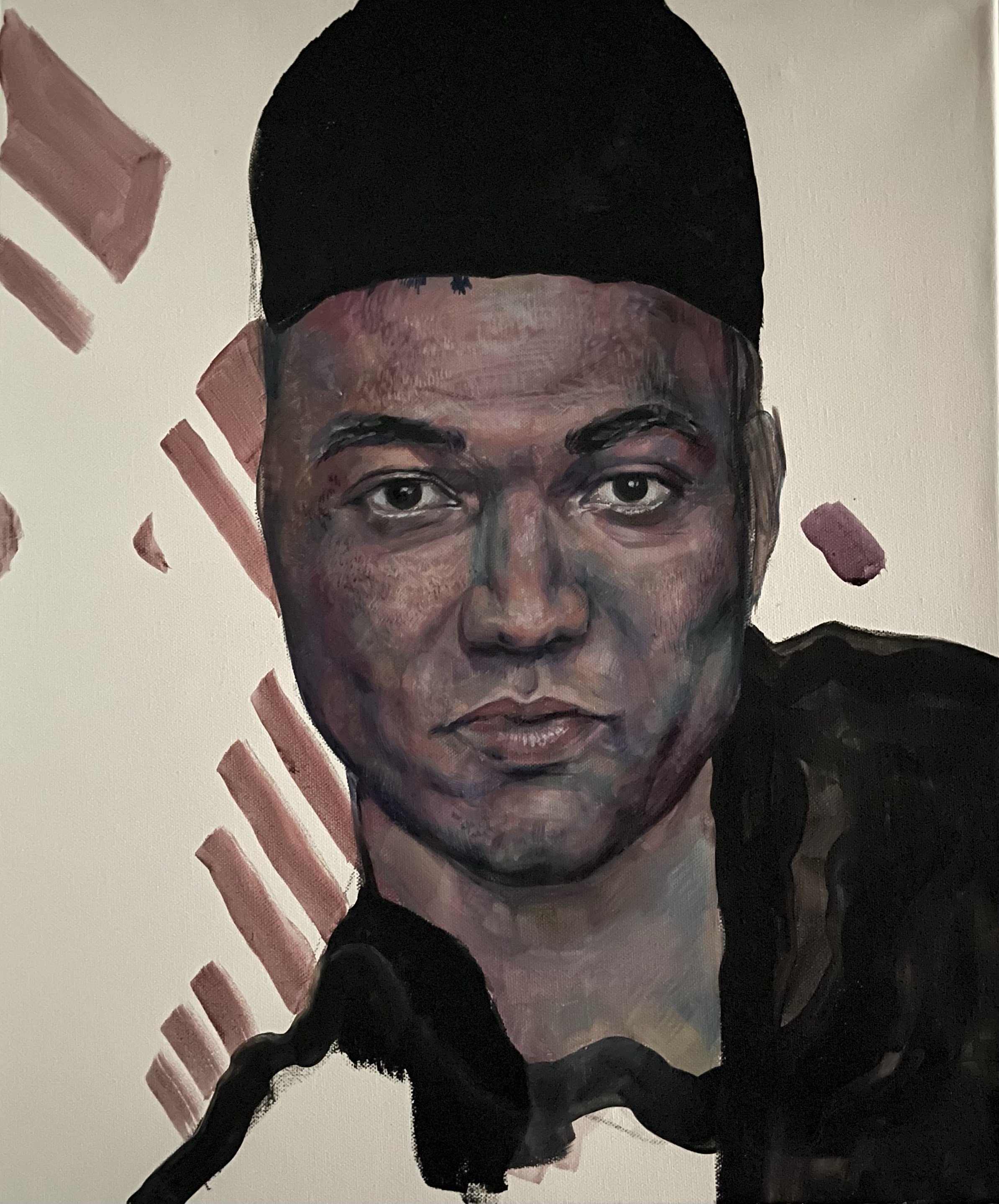
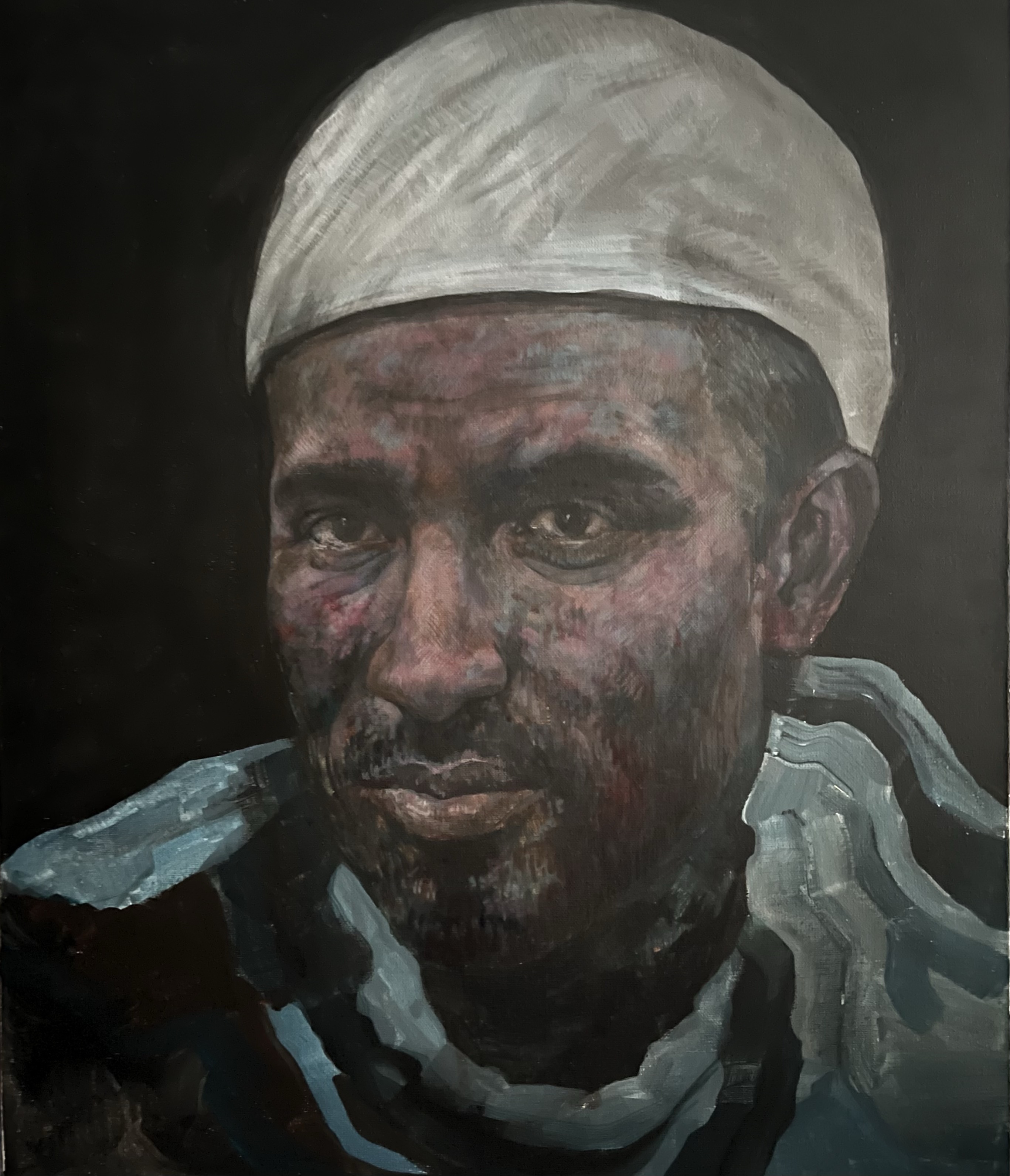
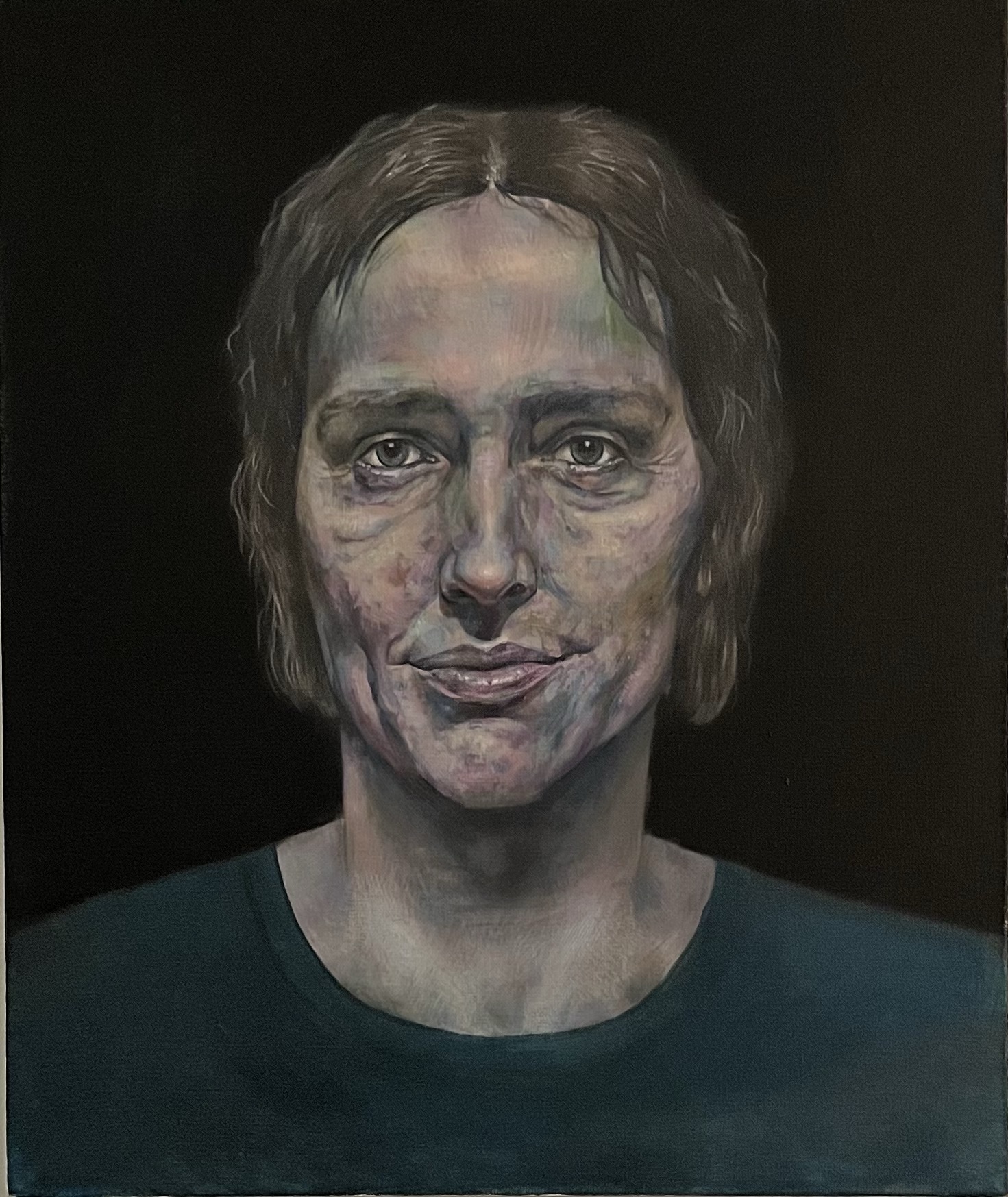
"The project Tales of the Limit began with portraits of non-existent people. Generated by GAN (or generative adversarial network) that uses millions of human images to train itself, these images, which I use as prototypes for the portraits, are a special mix of real human photos and the work of the artificial intelligence. Combining many faces into one, it also creates a fictitious identity. The first quality of great portraiture (…) is the power to reveal the inner character, or story, of the sitter. (…) The great portrait painter must be able to discern and seize the true self, revealed in instantaneous flashes, and then veiled.[i] But this inner character and the story of “the sitter” in this case are not initially present. Turning these faces into a painting could create a new conceptual line – by painting a portrait of a non-existing human can the artist somehow compensate these “losses”, this missing information of the new fictional individual during the painting (creation) process? Perhaps the role of the painter in this case could be recognized as a possible way to add a value in the form of visual information, which is otherwise missing from the algorithmic process of artificial intelligence. Such questions appear during the first phase of the project.
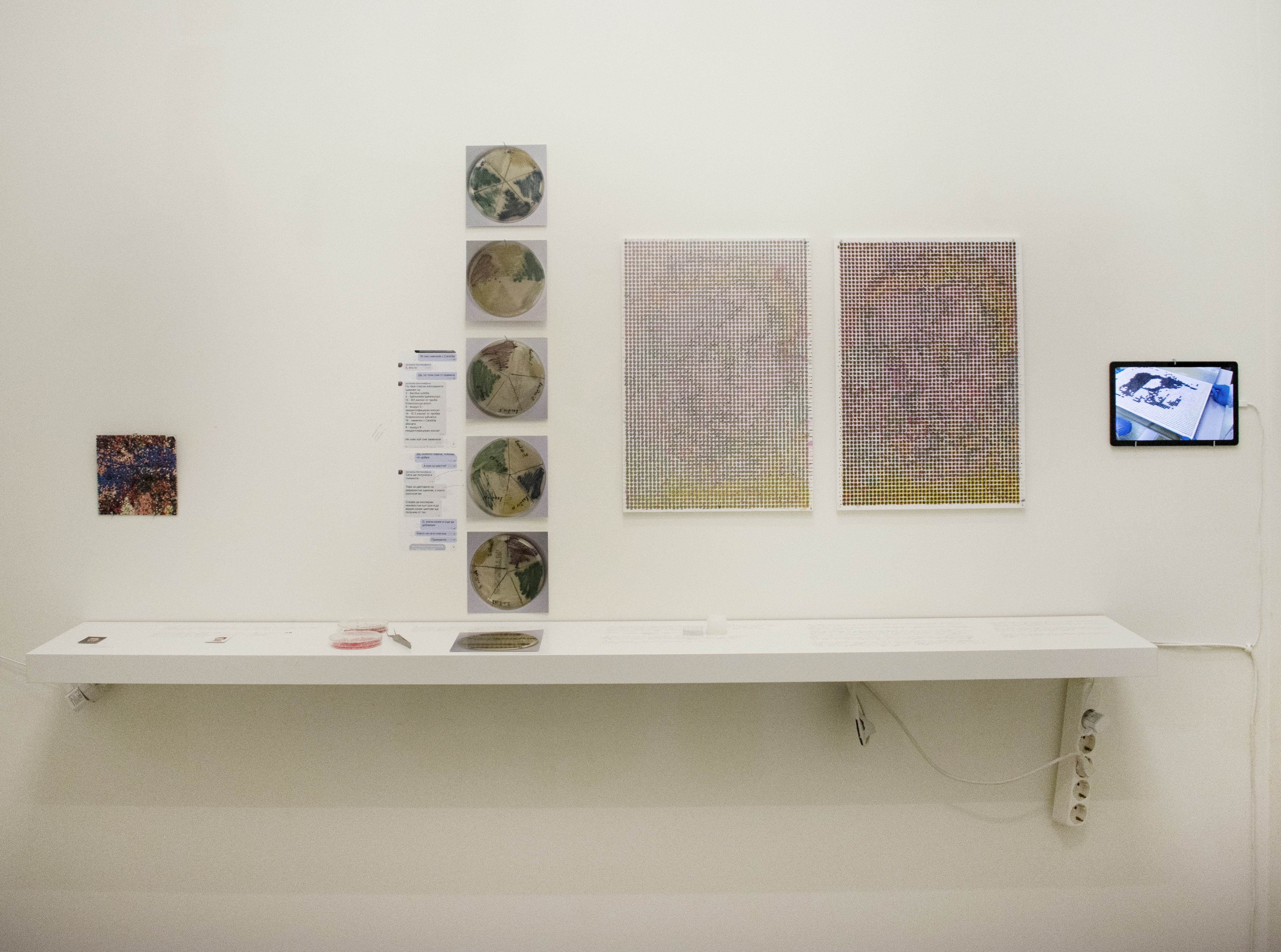
In the task of passing from the digital to the biological medium, the portrait needed to be structurally and visually adapted to a form which resembles the growth of the bacteria colonies in a petri dish. Different types of bacteria produce different-looking colonies, some colonies may be colored, they have different shapes, but they mostly resemble circles. Therefore, the mosaic tesserae chosen for the second stage were circular in shape – small plastic pieces, 2 mm in diameter which would show a visual representation of the colors, needed for the bacterial portrait.
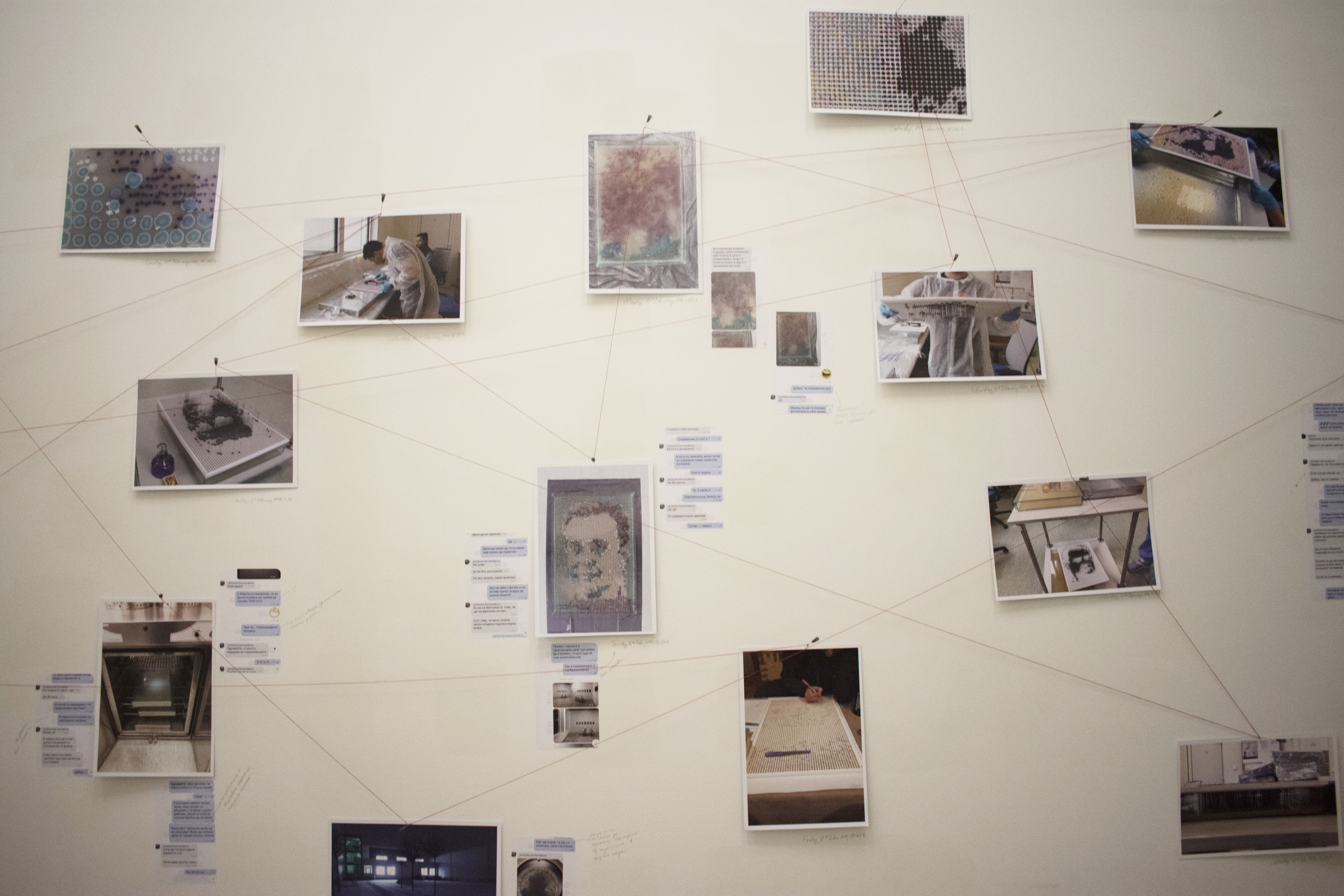
In the next stage, the mosaic was transferred to a bacterial form. Produced in a laboratory conditions, the bacterial mosaic was achieved by using two CNC-cut matrixes (designed by Martin Yordanov), modeled after the needles 22G with the smallest possible distance between them. The first matrix contained 3360 holes with the exact size of the needles and the other one - 3243. The needles were then placed according to every color of the mosaic – firstly placed in the bacterial agar, where they get contaminated with the correct bacteria, and afterwards in the agar, where they could seed the bacteria on the right spot. In the end, the portrait was placed in an incubator, where the conditions were perfect for the bacteria to grow.
Life organization is a complex concept. Different species inhabiting the biosphere by apply survival mechanisms thus they continue to secure their existence. By traveling from the digital medium through visual art, the non-existing human face ends up in the field of the natural world, where the laws of nature take place and decide its destiny. While using the correct colors, there is something else that influences the image – the struggle to survive. In a few days one can observe the changes in the bacterial portrait due to the growth of the colonies. While dwelling in the same living space, the bacteria are placed in a competitive environment – every species tries to fight for life resources and they constantly change the portrait by deciding how to behave. The different survival mechanisms include neutralism (they interact but do not affect each other), commensalism (the first species benefits, and the other one derives neither benefit, nor harm), synergy (both species support each other’s growth), mutualism (all species benefit from their interactions), amensalism (the first species is destroyed and the other one stays unharmed), parasitism (the first species lives on the other, causing it some harm), predation (where one of the species kills the other one). In the end, none of the strategies work, and all of the bacteria eventually die, because the life resources end. In any case, each decision reflects on the portrait, and the result of it is a change in the image. This is why for instance, the face does not have eyes – one of the species grows so rapidly the other one cannot.
During this process the connection between the image and its medium is the center of attention. The biological medium in its natural aspects could allow the exploration of life itself and its natural laws, for instance. An image can be quite influenced by the medium it belongs to, it is entitled to its limitations, it also follows the rules which the medium thrusts upon it. The image could therefore be a footprint, a generalization, a residual material of these inner processes."
[i] Estelle M. Hurll, Portrait and Portrait Painting, Accessed 28, December 2021 http://www.survivorlibrary.com/library/portraits_and_portrait_painting_1907.pdf.